
AI Recruitment Software: The Ultimate Hiring Assistant for Healthcare Industry
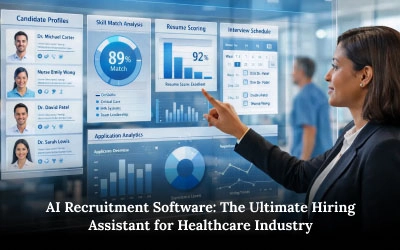
Discover Niyuk. Experience effortless screening and assessments. Book A Demo AI recruitment software for healthcare allows hiring process for remote, hybrid and on-site clinical and non-clinical roles by automation of candidate sourcing, screening, and scheduling. These tools support in handling high turnover in healthcare by finding qualified professionals, like nurses and technicians, up to 75% faster. In this blog, we are exploring everything you must know about AI recruitment software for healthcare and all insights about it in deep. First, we will discuss about the AI recruitment software. Find the Right Talent without Much Burden Strengthen healthcare recruiter with AI hiring solutions Get Quality Hiring with Niyuk Concept of AI Recruitment Software AI recruitment software applies artificial intelligence and machine learning to automate to improve hiring processes. Unlike regular ATS which simply stores and organizes applications, AI-based tools actively support you make best hiring decisions. Niyuk is the best example of AI recruitment software. It takes care about initial candidate screening, interview scheduling as well as AI Assessments. Niyuk has a great feature like AI Assessment, AI interview and Vendor Marketplace etc. To automate and collaborate the tough tasks of HR and hiring teams. What Healthcare Recruitment Means? Medical recruitment is a specialised hiring process, and normally, there is a vast gap in demand with supply. This is also one of the bigger challenges that recruiters face in this industry. This is the process for finding and hiring right candidates to work in many medical facilities like hospitals, clinics, nursing homes, rehabilitation centres, etc. It includes sourcing and screening potential candidates, salary and benefits negotiation, and checking for a candidate’s compatibility with the healthcare organization. What is a Healthcare Recruitment Software? A healthcare recruitment software is a distinct hiring software necessary to manage the medical recruiting process smoothly and ensuring for suitable candidates are matched with the right open roles. This tool is certainly designed to cater the unique hiring requirements of the healthcare industry, like background checks, verification of licensing and certifications, and compliance with regulations. Among many medical recruitment software’s and AI Recruitment software’s in the market, the most useful one is an applicant tracking system (ATS). This tool is excellent for resume parsing, filtering applications, and bulk emailing. It also helps with job posting across many job boards, career pages, and social media platforms i.e. LinkedIn, Twitter, Facebook, and more. All these powerful features may help recruiters make a more efficient, productive hiring cycle for healthcare organizations, allowing them to find quickly and hire the required talent. Healthcare system also benefits from AI recruitment software to simplify their hiring process and efficiently manage resumes and applicant information. It can also be used by recruitment agencies and headhunting firms specializing in medical hiring to simplify their talent sourcing and placement efforts. Features in a Healthcare Recruitment Software 1. Advanced Automation While most recruiting software already come with built-in automation features, it’s still tough for you to make sure that these are latest and up to date with the current technology in the market. You don’t want to be old source with outdated features when your competitors are running on the latest technology, right? So, it’s good to conduct via research on many hiring software to make sure that it has the features you need before making an investment. 2. Smooth Integrations To have a sound medical recruitment, you should be having a central system like prompt EMR for a fast and improved workflow so you can smartly deal with large volumes of candidate data. Also, for emergency service providers, EMS management software support in simplifying operations, to improve scheduling and following compliance, making it a valued tool in the healthcare ecosystem. This makes it valuable to find a software inspiring you to connect with many tools in a single place and integrate all your available portals and databases into a consolidated single system. Single communication solutions play an important role here by making sure for smooth integration of voice, messaging, and collaboration tools. Integrations will enable your recruitment team to work jointly, always stay online and generate feedback when needed. 3. Candidate Management A solid recruitment software will support healthcare recruiters smoothly store and manage candidate data and any relevant information which is vital to hire quality employees. With such data, recruiters may find preferences and matching eligibility for benefits in various cases, like a housing remuneration for travelling nurses. It also enables you to sustain constant communication with candidates, reach out to the actual job seekers, tracking of your candidate pipeline and more. This capability is vital for physician recruiters, who must manage tedious clinician profiles, their certifications and licensures. 4. Reporting & Analytics Metrics are a recruiter’s best tool. Be it to stay on par with the progress of the recruiting team or make informed hiring decisions, hiring statistics lead your way through. They provide you with full insights into what’s useful for your hiring process and what’s not, so that you can improve it relatively. To gain much better access to this vital information, you must ensure that the recruiting software you are investing in has reporting and analytics capabilities. 5. Candidate Sourcing & Resume Filtering The job market right now is complex today. So, you must level up your hiring game, if you want to source the best talent. This is why latest candidate sourcing is a must-have feature in your recruiting tool to get the best available applicants across a variety of platforms and develop a solid talent pool. Another important feature is resuming sorting. It helps you scan and sort out the most suitable prospects from the bunch of applications you receive, making it easy to select the best from the narrowed-down options. Streamline your Hiring Process with Niyuk Reduce delays and improve candidate quality Build Strong Teams with Us Which Are the Responsible Factors to Prefer Healthcare Recruitment Software? 1. Hard to Find Quality Medical Staff Finding job seekers interested is easy, but getting the right resources is. As per a study from SHRM, 46% of recruiters have reported that to fill full-time roles for high-skilled clinical positions like nurses, doctors, and specialists is a very tough task. In case you have lot of openings, but you are not getting the right resource for a single role within it, you must go for a medical recruitment software or AI recruitment software. It can help you filter out unqualified applicants to make a constantly overflowing pipeline of quality candidates ready to be hired. For example, if you’re hiring for a physician role, understanding how long a medical residency is can help you gauge a candidate’s experience level and make sure for your selected professionals -who are truly qualified. 2. Poor System Performance In case you are constantly getting issue at your customer side because of poor quality medical staffing or unqualified hiring done frequently. Then, this indicates a real requirement of recruitment software for the right hiring quality with required experience and skills. This is a proven solution to upscale hiring quality and efficiency at your healthcare organization rapidly! Every organization wants to get a point where they will achieve higher profits or
AI in Recruitment: Metrics that will matter in 2026
Discover Niyuk. Experience effortless screening and assessments. Book A Demo AI in recruitment is a current market trend for the corporate world. The recruitment arena is shifting from manual search to data-driven intelligence. Today, talent acquisition does not depend on the database size, but on smart filters of the top talent for every required position or role. As organizations face a “noise” crisis – thousands of AI-generated resumes are received for each job post – the role of AI in recruitment is evolving from a luxury to an essential element. At Niyuk, we really believe that the next edge of hiring belongs to those who can transform massive datasets into precise selections. By integrating a decent AI recruitment process, businesses can ultimately save several working hours lost to administrative friction in the current time. Automate your Hiring via AI recruitment Develop your elite teams with Niyuk Today Book Free Demo Now Beyond Automation: The Strategic Value of AI Recruitment Software Anyhow, modern AI recruitment software does more than just from a candidate from one position to the other. It analyses patterns. By 2026, we expect recruitment platforms based on Artificial Intelligence to function as intermediaries analysing candidates’ information or details provided but mapping their skills with the organisation’s outcomes and objectives. AI integration within a recruitment process allows your human recruiters to move ahead from their boring typing work. With platforms like Niyuk having features like Initial screening and resume matching, the team may concentrate on what really matters: improving customer relations and grabbing top-tier talent. The traditional/old hiring pipeline is mostly slow and prone to bias. A structured AI recruitment process forms a consistency level that manual screening simply cannot match. For instance, AI-driven metrics now allow us to track ” Hiring Quality ” with predictive accuracy, instead of waiting for six months to see if a new employee succeeds. Key changes in the process include: Skill-First Ranking: Moving beyond keywords to know the context of a candidate’s experience. Reducing “Slipped” Leads: Making sure that each applicant receives an instant, intelligent touchpoint of communication within minutes. Bias Mitigation: Using “masked” screening to make sure that each hire is based on merit, not subconscious preference. What strategic value Niyuk brings: Niyuk not only speeds up tasks; it simply refabricates the hiring journey to optimise human impact. Niyuk does it for precision and quality. Niyuk automates almost 70% of administrative routine tasks, shifting its focus from manual data entry to high-value tasks such as candidate interaction, customer requirement study, etc. Niyuk gives more important value to a candidate’s career journey and potential over keywords. With AI Assessments and AI interview features, Niyuk ensures quality hiring with fair competency. Why Top Firms are Investing in AI Recruitment Software? The conventional hiring landscape has reached a breaking point. For many years, talent acquisition teams have juggled under the weight of administrative debt, relying on fragmented Google Sheets and the labour work of scanning resumes line-by-line. This regular approach is not only slow; it is a major business risk. When a recruiter is stuck in a manual “paper trail,” top-tier talent accepts an offer elsewhere. That is even before the first interview is scheduled by the busy recruiter. Modern organizations are now moving away from these outdated systems and putting their resources into AI recruitment software. The shift isn’t just about replacing folders with files; it’s about moving toward a centralized, intelligent dashboard that offers total visibility. Unlike a spreadsheet, modern AI recruitment software understands the context of a candidate’s journey. It allows hiring managers to prevent guessing and start making decisions on real-time data, and the changeover of the recruitment desk from a reactive cost centre into a proactive growth engine. 1. Resolving the High-Volume Hiring Crisis This technological shift is most visible in industries like BPO, retail, and hospitality, where hiring is a dynamic game of scale and speed. In these sectors, a single job opening can attract thousands of applications, making what we call a “high-volume hiring crisis.” Trying to browse this manually is a mighty task – the process inevitably breaks, leading to “ghosted” candidates and exhausted HR teams. By use of AI recruitment software designed for bulk hiring, companies can automate the initial screening stages without any adjustment or compromise on quality. The software acts as an efficient filter. It rapidly finds candidates expertise in specific language, technical, or available criteria. For a BPO firm, this means the application time to the final shortlisting is dropped from weeks to hours. With the “noise” automation, recruiters can finally spend their time on the high-potential candidates. 2. How Niyuk Resolves the High-Volume Hiring Crisis? With technical screening and technical vetting automation, recruitment software lowers manual review time by around 70%. The HR team becomes free to handle or address high-potential candidates. This simplifies the AI recruitment process, removes candidate ghosting (fake candidates) and administrative issues, allowing BPOs to move their processes with speed a great hiring. Automate Vetting with Niyuk Tools Explore our premium AI recruitment software Request Niyuk Demo Redefining Efficiency via a Structured AI Recruitment Process Automation is often misunderstood as a direct replacement solution to the human element, but a well-made AI recruitment process protects it. When a recruitment pipeline is manual, the human recruiter is too exhausted by data entry to get engaged with people. By shifting to an intelligent workflow, AI essentially clears the path, allowing the “human” parts of hiring – empathy, culture fit, and negotiation. The modern AI recruitment process functions like a high-class filter. It begins the moment a candidate interacts with an advertisement, immediately triggering a series of background checks, skill validations, and logic tests. So, it is all about gathering deep insights before a recruiter connects with the phone. By the time a hiring manager sees a profile, the “process” has already verified that the candidate has the core competencies required for the role, effectively removing 70% of “mismatch” noise. One of the main pain points in regular hiring is the “subjectivity trap,” where candidates are mostly moved forward because of resume formatting or keyword stuffing over actual ability (even missing those required skills). A data-driven AI recruitment process replaces this guessing with objective benchmarks. Instead of a recruiter spending six hours a day in PDFs, the AI-based system uses semantic analysis to understand the depth of a candidate’s experience. It looks for patterns in career progression and cross-references them with the specific needs of the department. This level of accuracy guarantees that your final list goes beyond merely including candidates who present on paper. Instead, it features a carefully vetted selection of candidates who are statistically positioned to grow within your unique company culture. The outcome or result? A quicker hiring process and a notable increase in employee retention graph. Streamlining the Candidate Journey via the AI Recruitment Process AI Automation is often misunderstood to “remove” the human element, but a well-structured AI recruitment process protects it. When a recruitment pipeline is purely manual, the human recruiter is mostly too exhausted by data entry work to engage with people. By transferring to an intelligent workflow, we compulsorily clear the administrative path, enabling the “manual” parts of hiring – empathy, cultural fit, and negotiation – to take centre stage. The modern AI recruitment process works like a highly accurate funnel initiating the moment a candidate deals with a job post. It smoothly seals the gap between Sourcing and Screening, where the system gathers deep insights before a recruiter comes in. By the time a hiring manager sees a profile,
Niyuk: The Best Hiring Tool to Cut Recruitment Cost
Discover Niyuk. Experience effortless screening and assessments. Book A Demo In today’s dynamic talent market, recruitment plays a significant role in driving the growth and success of modern organisations. Anyhow, the hiring tool can have a remarkable impact on a company’s operations and entire human resources budget as well. From advertising of job openings to onboarding new hires, these costs can rapidly add up, certainly when recruitment processes are not to the mark. We have the solution i.e. Niyuk for the same. In today’s era of smart recruitment software, businesses have the tools to simplify the hiring process, boost decision-making, and dramatically decline recruitment costs. With the use of AI-based screening, automated communication, and centralised applicant tracking, businesses can lower manual effort, boost accuracy, and really cut down non-required expenses. This innovative approach makes sure for companies not only to save money but also improve the entire recruitment experience. What Does Recruitment Cost Means? Recruitment cost is the total cost required for attracting, selecting, and hiring candidates during the full recruitment or hiring process. This covers a wide range of activities and resources contributing to the hiring process, whether they are internal / external to the organisation. Recruitment costs are generally categorised into 2 types: 1. Direct Costs These are the visible, immediate expenses directly relative to a role closure. They cover up job board fees, recruitment agency charges, advertising costs for jobs, background checking cost, travel reimbursements for candidates, and employee referral bonuses. They are typically easy to track and quantify. 2. Indirect Costs These are the less obvious but equally remarkable costs arising from the recruitment process. Indirect costs encompass lost or missed productivity because of the vacant positions, training activities, onboarding of new employees, time shared by internal HR staff on resume screening and candidate interviews and increased expenses due to a bad (or poor or non-deserving) hire. Effective workforce planning and budget control are dependent on monitoring and reducing these types of hiring expenditures. Realizing the average recruitment cost per hire enables organisations to set benchmark and strategize cost-effective recruitment working. Affordable AI-Driven Recruitment Implement our AI recruitment software to optimize your AI recruitment process. Book Demo Today What Is the Importance of Recruitment Cost? Recruitment is not only about recruiting candidates for the open vacancies. It’s a strategic function which may drastically affect your organisation’s budget and performance, as well. Knowing about the critical importance of recruitment cost supports you to take up best possible hiring decisions, smart resource management, and guide long-term business growth. Here’s why it’s vital: 1. Impact on the Overall HR Budget Recruitment may represent a large portion of an organisation’s HR cost. Advertising job roles, using paid services of recruitment agencies, running background checks, and onboarding all come at a cost. When hiring is not sufficient or happening again due to poor retention, these costs grow at high rate, leaving less budget for other key HR initiatives like employee engagement, training, and development programmes. 2. Influence on Time-to-Hire and Quality-of-Hire Recruitment cost directly effects on how fast you get in the fresh talent. The more time it requires the more hiring cost. This also increase burden on teams as well as more time wastage for the same. On the other hand, accelerating the process to cut costs can damage the quality of the hire, this leads to mismatched candidates and eventual turnover. A balanced hiring strategy is a key to cost control without doing compromise on the quality of talent. 3. Hidden Costs of Poor Hiring Decisions Not all recruitment expenses are well enough. Bad hiring decisions may result in hidden costs i.e. dropped productivity, low employee morale, increased supervision responsibilities, and extra amount of time spent managing performance issues. If the placed candidate leaves, the re-hiring and re-training again starts the recruitment journey or cycle, expanding the budget and juggling with team stability. All details about the applicant tracking system are not necessarily right. Some of them are myths. Let us discuss them here one after the other. What Are the Reasons of Added Recruitment Costs? If your average recruitment cost per hire feels unsustainably high, the following factors could be anticipating: Humanised hiring workflows: Depending on spreadsheets, emails, and data entry slows down the process and expands the risk of error. Lack of automation: Without collaborative tools, team’s experiences delays and miscommunication. Poor candidate experience: Long lasting processes and precise communication leading to high drop-out rates. High employee transit: A rushed hiring process mostly leading to poor matches and early exits. Heavy dependence on recruitment agencies: While they can be helpful, agencies may remarkably improve your costs if used as your primary process. Limited recruitment insights: Inadequate, incompitent data makes it tough to measure success or find the real bottlenecks, resulting in bad hiring decisions. What Function Does Recruitment Software Serve in Hiring? Recruitment software is becoming a game changer. It’s a digital platform crafted to manage and maximise every stage of the hiring process. Either purchased as an outperformed solution or made by a custom development company to meet certain organisational needs, recruitment software goes a step ahead by incorporating artificial intelligence, automation, and advanced analytics to maximise hiring efficiency. As per the 2025 HR Tech Report, businesses going with AI recruitment software have seen a 35% drop in the cost per hire and a 42% enhancement in time to fill. Key Features are: AI-powered candidate screening to grab top talent rapidly and drop down the manual workload. Automated communication for a genuine, engaging candidate experience. Centralised applicant tracking system to offer team collaboration and boost visibility Customization-friendly analytics dashboards to monitor real-time key recruitment metrics. Simpler integration with job boards, social media platforms for a bigger outreach. Inside compliance tools to meet data protection regulations such as GDPR How to Have the Right Recruitment Software? Getting the right recruitment software is tedious for developing a timely and cost-effective hiring process. The factors need to be considered. Here are key considerations to support your decision to go for a perfect recruitment software: Scalability and CustomisationOpt for a solution growing with your business and gives flexible customization, whether it’s collecting workflows or managing raised hiring volume. User-Friendly Interface and SupportAn easy, intuitive design supports your team to get started quickly. Sound customer support, training resources are very important for long-term success. Data Protection Laws (for Compliance)Be alerted to comply the software with the General Data Protection Regulation (GDPR) regulations. See features i.e. user access restrictions, data storage security, and compliance tools. Reviews from Users and Trial (Evaluation) PeriodsTry out the free trials to check and refer platform’s features and usability benefit. Check the reviews from the users to know real-world performance, support level, and reliability also. Your Search for the Best AI Hiring Tool Ends Here. Make the smart investment in AI hiring this week. Calculate Your Savings How Does Recruitment Software Aid in Lowering Recruitment Expenses? Recruitment software is made to ease the full hiring process, delivering remarkable cost savings across various areas of your recruitment strategy. Refer these tools here, which can directly drop down your recruitment costs: 1. Refining the Hiring Process Automation accelerates key stages, like candidate screening, interview scheduling, and required communication. By reducing delays, recruitment software conserves the time-to-hire, assuring about quick onboarding and lessen productivity loss. 2. Avoiding Dependencies on External Agencies Recruitment software easily permits or enables staff members to handle candidate sourcing, their resumes screening, and communication with them,
AI in Recruitment Shaping the Future of Hiring in 2026
Discover Niyuk. Experience effortless screening and assessments. Book A Demo Hiring in 2025 is all about making future-ready teams and not only filling up the positions. AI in recruitment is now at the centre of the significant change in the hiring landscape. Intelligent systems are revolutionizing the way businesses recruit evaluate and retain talent from resume screening to onboarding. But let’s be clear: This is not a tale of human beings being replaced by machines. It looks after technology improvising the human potential. AI in recruitment is a new trend in global HR arena nowadays. It has been a game changer for the hiring and recruitment word so far. Intelligent Recruitment as Opposed to Traditional Hiring Conventional hiring practices have long been the standard including phone screenings manual resume reviews and gut-based selections. Traditional hiring and its techniques are becoming less effective in today’s fast-paced data-driven world. Overwhelmed recruiters. Hundreds of applications may be submitted to a single job posting many of which are never read. Bias intrudes. Promising applicants are passed over. Furthermore, hiring timelines are much longer than what companies can afford. About intelligent recruitment: a more efficient, quick and balanced hiring process. Ready to Move Ahead of Traditional Hiring? Explore how AI in Recruitment process can help you find top talent faster and smarter. Contact Us What Makes AI in Recruitment So Effective? What Makes AI in recruitment So Successful? Let’s examine the main ways that AI recruitment software is altering the landscape. Analogous intelligent robotization and real-time conversational capabilities are used in client support systems, where AI call center companies help manage high-volume voice and text relations seamlessly. 1. Intelligent Screening of Resumes In the past keyword stuffing was common. AI recruiting tools of today examine resumes for potential context and relevancy. To provide recruiters with a more comprehensive and accurate picture of each candidate they evaluate their abilities background and even career path. Results have been striking for companies such as Unilever. They improved candidate quality overall and cut hiring time by 75% by automating resume screening. 2. AI Video Interviews AI platforms for video interviews performs more than just a visual dialogue today. They examine word choice tone and facial expressions to reveal information about a candidate’s confidence communication style and cultural fit. This improves human judgment rather than replaces it. Richer data gives recruiters the ability to make better choices and make stronger hires. 3. Predictive Hiring Analytics Imagine being aware of not only who is qualified but also who has the best chance of succeeding. Predictive analytics has that kind of power. AI-powered hiring systems predict team compatibility retention and performance by examining past data. By utilizing these tools Amazon and IBM can create diverse high-performing teams demonstrating that strategic hiring is more than just efficient. 4. Real-Time Candidate Engagement Modern chatbots for hiring provide round-the-clock assistance. They make the process easier for applicants and reduce the administrative load on HR departments by providing updates scheduling interviews and answering questions. Hiltons chatbot for example handles thousands of interactions daily to guarantee that no candidate is left in the dark. 5. Job Descriptions that are Optimized Making inclusive and interesting job postings has become a science. AI systems examine listings that are successful and recommend changes to the tone organization and keyword usage. By doing this bias is lessened and the right candidates are drawn in. To help hiring managers set reasonable expectations some platforms even forecast the volume of applications. Some sophisticated systems also examine candidate behaviour such as how long a candidate reads a post or which sections they skip to enhance future listings. Underrepresented groups find more appealing roles when implicit bias is eliminated via inclusive language checkers. Recruiters can proactively modify schedules and sourcing strategies by use of predictive analytics to predict the volume of applications received for a position. Startups, SMEs must develop job descriptions that accurately reflect company culture and resonate with conversion, if they want to equally compete with the larger companies. 6. Skills-Based Assessments AI-powered hiring focus more on a candidate’s abilities over their background. Self-taught experts have an equal chance in skills-driven assessments that measure technical knowledge problem-solving abilities and coding proficiency. With the help of these tools, Google and Microsoft are spearheading the effort to access unconventional talent pools. AI tracks performance patterns including creativity adaptability and speed at solving problems while platforms like Hacker Rank, Codility and TestGorilla enable recruiters to build tests that are in line with jobs. Career changers bootcamp graduates and self-taught professionals who might otherwise go unnoticed now have more opportunities. Nowadays, major tech companies like Google and Microsoft give priority to these tests to diversify their talent pipelines and access international talent pools of highly qualified people who flourish outside of conventional educational systems. For businesses looking to create creative flexible team’s skills-based hiring guarantees meritocracy and uncovers untapped talent. 7. Facilitated Onboarding Strategic recruiting has many benefits including hiring. AI systems automate onboarding processes customize training curricula and provide real-time assistance to make sure new hires feel ready and accepted. The Unabot from Unilever guides new hires through their first few weeks collects feedback and responds to inquiries freeing up HR teams to concentrate on culture development. How Niyuk Helps in AI Recruitment Niyuk a futuristic platform that is revolutionizing how businesses find and engage talent is a notable illustration of intelligent hiring in action. The recruitment process from sourcing to selection is simplified by Niyuk using AI recruiting tools and software. Recruiters can evaluate candidates more quickly thanks to its user-friendly interface and AI video interview features and its AI driven recruitment engine makes sure that only the most pertinent profiles appear which saves time and increases hiring accuracy. Niyuk’s ability to combine personalization and automation is what makes it unique. Because of its modular architecture teams can progressively implement features beginning with resume screening and progressing to automated scheduling video interviews and predictive analytics. Because of its adaptability it is perfect for large