
Top 10 Demanding Skills Recruiters Are Looking for 2026

Discover Niyuk. Experience effortless screening and assessments. Book A Demo The job market in 2026 will be ever evolving, automation -led, global level of competition, and upcoming technologies. Either you are a student trying for your first role, a professional wishing to grow, or someone looking for a career switch, learning high-income skills in 2026 is not going to be just a money. It is about future-proofing your career and staying updated in a dynamic world of present era. Skills recruiters are preferring candidates with top-class skills in 2026 like data analytics, critical thinking, leadership abilities, AI and Machine Learning. Candidates with the ability to possess both – technical and soft skills and apply them in such a way that sets candidates apart and opening doors for great career development. In this blog article, we are highlighting the 10 best skills to learn in 2026, complete with action tips to help you to have a start. You will also find guidance on selecting the right skill suitable for your background and making a plan for skill acquisition maximizing your calibre and places you for success in the ever-changing job market. https://youtu.be/RlsMKytV4B8 How to Choose the Right High-Income Skill Based on your Background Getting a high-income skill is not about chasing the current trend; it is about matching your natural strengths, industry context, and learning appetite towards the market directing. A skill only becomes a career asset when it complements who you are and the problems you wish to resolve. In deep corner of the same, here is what you can go for: 1. Align your Strengths to Market Needs Start by knowing your core abilities. Skills are the tools to keep you sustained for the long run. Join yourself with you are already good (your stronger skills) with a high-demanding area: Analytical thinkers could get ahead in AI/ML, data science, or cybersecurity, where pattern recognition & problem-solving are top valued. Creative minds can prosper in digital marketing, contemporary social media strategies, or great quality UX/UI design, where empathetic approach and storytelling skill lead for great results. Leadership-driven professionals are ‘Natural Fit’ into project management, digital transformation, or also into emerging technology leadership positions. 2. Look at Industry Trends and Future Demand Your background matters, but so does where your industry is going: Tech graduates can get deep into AI, cloud computing, or cybersecurity – fields where technical depth takes to premium pay outs. Non-technical degree holders can build bright careers in Digital marketing, Project management, or UX/UI design, with a combinational mix of business strategy and creativity skills. The highest money makers in this, reap benefits from the intersection of disciplines, AI-driven marketing, data-led project management or sustainable supply chain analytics details. Just not restrict yourself to “IT vs. Non-IT”; Keep hybrid mindset always. 3. Factor in Lifelong Learning /Expanding your Skills Some fields updates fast than others. If you do not like constant updates, cybersecurity or cloud might feel boring. If you love playing around with new tools, these fields may be amazing for your career journey. Pick a skill where you are genuinely excited to stay updated: reading whitepapers, joining webinars, experimenting with tools. This “skill stamina” makes sure that you not only catch a skill but sustain it, making you valuable for years, not months. Short-term payouts: Select a skill that can get you hired or freelancing fast. Long-term income and growth: Pick one that combines with experience and tech advances (AI, green skills, prompt engineering). By now, you have scanned out your strengths, reviewed and checked up industry trends, and identified the skills you are excited to master. But there is still one big decision point that can shape your income calibre for years to come. Unlock Proven Talent Find your next hire with Skills Recruiters today! Book A Niyuk Demo Now IT vs Non-IT High-Income Skills: Which Should You Go Far? Whenever we consider about high-income skills, then the picture splits out: IT skills like AI/ML, cloud computing, cybersecurity, or programming or non-IT skills like digital marketing, project management or emotional intelligence. The future of work will be majorly an interweave of tech and non-tech expertise. IT skills delivering high pay, deep specialisation, and global demand, but they require constant upgradation and a passion for resolving technical problems. Non-IT skills also command premium pay and offer scalable, faster entry routes, especially for professionals excelling in strategy, creativity, or people leadership. In short, high pay and strong demand lies in IT, non-IT, and the robust overlap between the two, depending on your individual strengths and interests. But only information will not take you there. You will earn a highest return among all is how fast, effectively they transform knowledge into real capability. Further, we will find out practical, high-impact ways to excel in these skills faster so you can short the learning curve and start watching results early. 10 High-Income Skills Recruiters are Keenly Looking in 2026 You really want to excel in your career in 2026- check out these 10 high-income skills – from AI and machine learning, Data Analysis to Digital Marketing and Project management – are making over the opportunities of the next decade. Find the best suitable skill for your growth and development among them and act accordingly. 1. AI and ML Skills AI and ML is the heart of Digital transformation today. These latest technologies are rafting several high-paying roles in data science, natural language processing, robotics, and big data analytics. Today, AI is not anymore, a future trend; it is a must have skill for anyone focussing to grow in a digital-first organisation. AI and ML refer to technologies allowing machines to learn from data, find data patterns, and make decisions with minimal human intervention. Consider ChatGPT, predictive analytics, image recognition, and autonomous systems. Professionals who have adopted AI and ML more than building machine learning algorithms, are enough manageable to implement AI and ML in real-world applications. Their combination of technical expertise with soft skills to transform data into actionable insights and scalable business impact gives great returns. Best ways for learning AI/ML skills in 2026 To complete Micro-degrees programs available on Coursera, edX, or Google AI Try out Project-based learning with Kaggle competitions, open-source contributions Follow AI communities from LinkedIn or GitHub for mentorship and networking High-paying AI/ML jobs Data Scientist AI Engineer Machine Learning Specialist NLP Engineer AI/ML tools to know (and master) Python, R, TensorFlow, PyTorch, ChatGPT Prompt Engineering, Hugging Face. 2. Data Science and Data Analytics Data science and data analytics centre on turning rough data into actionable insights driving efficient business decisions. It includes collecting, cleaning, and analysing larger volumes of data – from developing predictive models to create clear visualizations using tools such as Tableau and Power BI. Opportunities (Demands) in data science and data analytics Today in 2026, businesses from various industries like finance, healthcare, e-commerce, and manufacturing, will depend on data-driven decision-making to boost efficiency, enhanced customer experience, and drive growth. But “big data” becomes valuable only when you can take out important insights from the same. That is why, data analysis and modelling are among the most beneficiary specialised skills today. Intelligent professionals with thorough theoretical knowledge of statistics with hands-on tools makes leaders to take informed decisions promptly. Organisations are processing big volumes of data, and skilled professionals who can be able to translate it into actionable insights and will remain among the highest-paying and highly demanding roles.
Secret Formula for Fast Hiring: Unlocking the Benefits of ATS

Discover Niyuk. Experience effortless screening and assessments. Book A Demo A complete Software(ATS) taking care for all recruitment processes in less time and cost is a blessing for HR managers today. In this blog, we are elaborating the benefits of ATS in this blog article to pinpoint the importance of ATS. At first, let us get well verse with What is ATS and how it works in the next section. ATS is one form of AI hiring process. What is ATS? ATS simply means Applicant Tracking System (ATS), also known as a talent management system, supports in simplifying the complete hiring process for an organization. Typical duties of ATS include maintaining applicant information, posting job openings to many job boards, and resumes screening for prospective matches. To make it easy for every concern person engaged in the hiring process to work together, an ATS can also allow recruiters to comment on and score candidates in a database. How ATS Works? Let us see how ATS functions in stepwise process here in this section. 1. Resume Scanning with Keywords AI in an Applicant Tracking System (ATS) is trained to think like a recruiter. It rapidly scans resumes for the exact keywords you’re looking for (like “Sales Manager”), imitating the manual work but very faster, saving your valuable time and money while declining mistakes. 2. Resourcing for the Right Candidate Application tracking System is quite capable of finding the right or perfect candidate for the open position. It simplifies the initial hiring process. If you will not include the proper keywords in your job description and if they are not written correctly, you would not attract any qualified people. Also, “knockout questions” are provided by ATS systems to wipe out applicants who unsuitable resource is. The inclusion of checkboxes or brief answers. A candidate is automatically removed by the algorithm if they do not reply to them. Once a candidate replies to the questions successfully and in line with the described company requirements, the system will move on to the further stage of the hiring. 3. Candidate Scanning and Sorting Employers may easily take note of the main details, which resume parsing technologies added into applicant tracking systems captures from a candidate’s CV. Many applicant tracking systems (ATS) typically let top class candidate’s CVs and write brief notes, making simple and collaborative hiring process. Additionally, recruiters focus terms like software do such as educational background, particular abilities, or even manually applied filters that may be helpful. With the help of an AI tool or software like ATS, Recruiters can rapidly scan and sort resumes and can arrange interviews accordingly. 4. Applicants Tracking You can follow the progress of resumes via each stage of the recruiting process once you’ve finished scanning and sorting them. For example, if you are interviewing seven individuals, your application tracking system (ATS) will show every candidate’s stage wise status i.e. He is a new applicant or if they are in the first or second round of interviews. An applicant will be there in your recruiting database for future positions even though they are not shortlisted in the mid of the process. Vital Benefits of ATS 1. Flexibility For recruitment companies, ATS proves to be a game changer, as its flexibility level is much more. You can post reviews, comments and feedback everything online with it. ATS doubles up productive time of HR concerns by managing long excel sheets, working notes and email follow up along with interview schedules with the help of AI technology. 2. Time Efficiency The automated or AI driven ATS is faster in working as compared to a conventional ATS system. Almost 75 to 88% of resumes are unsuitable or inappropriate for the required positions, and this is expected to be filtered out by the ATs system- conventional or automated, whichever is applied. But this is taken care by automated ATS, if it has been applied by the concern business. It does in some moments! 3. Easy Interview Scheduling Most challenging part of interview process is that to allocate proper time slot to each candidate to show his talent and skills properly. But on the other side, another challenge lies in conflicts of 2 schedules of interviews many times. They believe that it takes lot of manual effort and time, rather than scheduling interviews. In automated ATS, it gives automatic emails of notifications to the shortlisted candidates for interviews. This saves a lot of time and effort for the HR department. They can plan other priority tasks like candidate relationship management etc. 4. Facilitate Job Posting With ATS, you can post your job post on multiple platforms, simultaneously on a single click. You need not to log in each social media platform and publish your post. The omni channel support is provided by the ATS. Also, the Post analytics are available by the ATS for every platform for your ready reference. This saves ultimately remarkable time span of HR team. They can do job postings effortlessly with ATS. Secondly, with ATS they can incorporate the careers page from the website to collect the applications of candidates online for every job opening. This inspires recruitment marketing by making a Recruitment CRM with ATS for the company website and boost its traffic. Stop Delays in your AI Hiring Process Simplify your Interview Scheduling now Upgrade to ATS Systems Recruiting Today 5. Hiring Quality The early is the better! If you can snag bright talent for your job opening promptly over your competitors. This will also increase the efficiency of HR team and give the early edge over the market. Quality hiring is not by chance, but by smart efforts at the earliest. 6. Positive Candidate Experience Due to faster recruitment processes and skipping of unnecessary delays during the interview stages, candidate experiences good and positive for the company, irrespective of their selection. This also improves the company brand image for all others, who are thinking to apply for the future to work with the company due to the same. 7. Big Scope of Audience It is quite easy to locate the suitable individuals because of an applicant tracking system. With automation of integrations, it may quickly collect resumes from a bunch of social media sites and job portals. HR teams can access various social media platforms for job aspirants suitable for their job requirements via ATS. Many ATSs relate to various social platforms and recruit CRMs, are ready to provide resources in few clicks. 8. Simplified Recruitment Process HR teams can easily manage candidate assessments on every stage of the recruitment process with the help of ATS. As everything comes streamlined, it is easy to manage candidate evaluation for many job positions in some moments, as compared to old method of recruiting consuming many hours for the same tasks. This gives quick and effective work on the part of recruiting agencies. A recruiting ATS system will replace their time-consuming task like documentation, working with spreadsheets, keeping
8 Top Transforming Benefits of AI in Recruiting
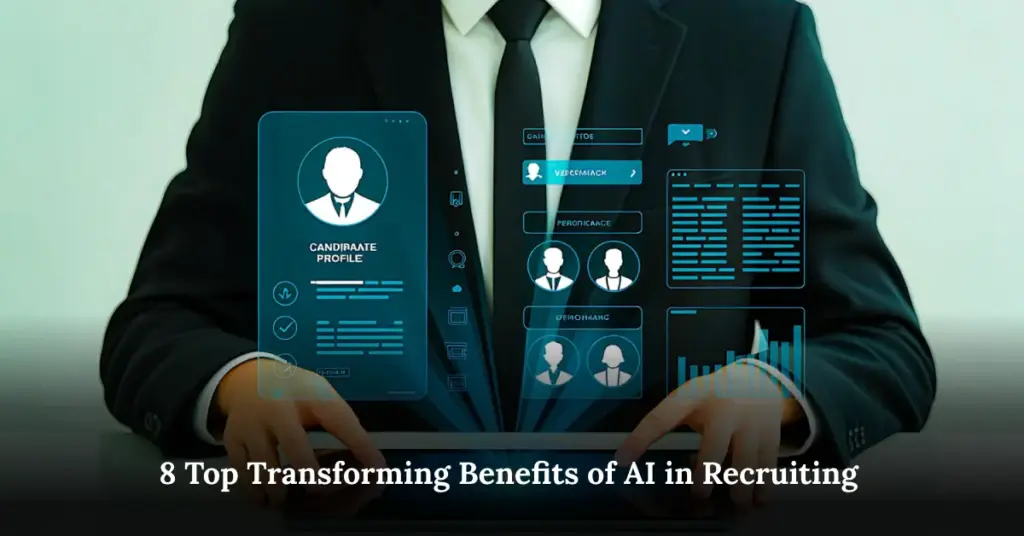
Discover Niyuk. Experience effortless screening and assessments. Book A Demo AI offers many key-changing benefits making it a vital tool for today’s recruitment needs. Time-taking processes like resume screening, candidate communication, and interview scheduling have become very easy to take over by artificial intelligence. AI in recruiting is a latest trend in the HR arena in today’s edge of AI technology. AI in recruiting is becoming a potential time saving concept for HR concerns, who were really struggling to work hard, putting in many manual hours on various repetitive task with great human efforts. This was for the goal of getting top quality hires for a long period for the organisation. AI allows HR teams to create fast, accurate hiring decisions, allowing them to entrust on vital tasks. In conventional hiring these tasks are time taking. The Show Down: Benefits of AI in Recruiting 1. Effectivity & Time-Savings As per reports, almost 14 hours within a week are saved for HR recruiters and staff. The big portion of the recruiting process like many routine tasks like screenings of resumes, follow up emails with candidates for interviews, interview schedules etc. are done by AI. Today, several companies are applying AI chatbots to make their hiring process fast and efficient. These AI chatbots carry out variety of work, and without any human intervention. They simply take care about supporting customer queries 24/7, doing routine tasks of HR concerns and releasing them free for more priority tasks. By adapting AI in recruiting process, HR can focus on much needed duties of their’s like connecting with top-class talents, informing strategic decisions regarding recruitment and hiring to concerns etc. 2. Cost Saving on Hiring / Recruitment As we know, AI technology is saving man hours a lot, is obviously saving hiring or recruitment costs up too many extents. In normal hiring process, HR staff used to upload various job posting on job boards for a longer time to get good quality candidates for these required job postings. Thanks to AI in Recruiting. It has saved these human efforts and waiting time upon postings on several job boards. Well, and this is also not all. AI revitalises the whole process by keeping the retention rate high and getting the quality hires and avoiding bad hires for every post under recruitment. An extra cost spent on mis-hires is almost 27% of their annual compensation. And this is a great saving! 3. Skipping Human Bias In a conventional human based recruiting process, humans take decisions mostly affected by some bias unintentionally due to personality traits or demographics. But in the long run, this is not justifying to the role as well as for the overall business. AI can make sure that the recruiter selects the most suitable candidate for the role by ignoring any biases. This is the perfect result due to the use of AI technology removing human biases by surpassing any human emotions involved in the final candidate selection process and grabbing the most talented and right candidate for the organisation in the long run. Explore why Niyuk is the Benchmark We give the best AI tools for recruiting available Book Demo Today 4. Good Candidate Experience Recruitment is no more a one-way traffic in favour of the employer today. He needs a right candidate with quality where candidate also need a long-lasting good job. This is an equal game for both sides. Conventional Recruiters never had any sympathy or respect for candidate’s time and efforts during the whole recruiting process. But things changed a lot today, especially after COVID outbreak, now every employer is working on techniques to retain and engage a candidate for more time during the recruitment process. AI brings up a very nice candidate journey of engagement during the full recruiting process without any boring procedures and long-lasting feel to the recruiters, as well. A recruiter simply can start an AI chatbot answering routine questions of the candidates as well as set an emailing schdule.Candidate will get their stagewise application status or recruitment status during the process via regular emails in their inboxes. As research shows 58% of candidates reacts negative to a company’s offer because of their bad company experience to candidates. Also, 76% of candidates feel that No reply after an interview from a company is more painful than any other life issue delays. This is a real figure based on the said fact here! This data highlights the importance of AI in recruitment. 5. Quality Hiring AI works wonderfully in this area in actual. With the help of AI skillsets like Natural language Processing (NLP) and Artificial intelligence, the top talents i.e. candidates with effective skillsets and talent, AI matches the exact required parameters like these with the desired candidate and creates the situation for hiring in this case. No other human prejudice can affect this data-driven decisions. The accuracy of the AI driven hiring result or resource searching is very much accurate over any other human based screening and matching method. AI takes care of all this with no bias and completely analytically and professionally right. AI does the entire candidate pool research for a fair decision. It works on previous candidates also and filters out the entire databases to have ideal matches, even thinking about passive candidates who are not active fir the job for more period. This process enhances hiring choices and assure that each capable candidate is reviewed for the best quality and fair hiring. 7. Data-Based Decision Making AI recruitment tools use data analytics to make data – driven decisions. It’s an interesting question that from where this data coming from? We have this answer. The data is drawn from large information pools such as market trends, previous hires, and performance analytics. This data-driven approach helps recruiters to acquire patterns like performance and employee turnover etc. This supports in defining revised HR strategies for the best hiring candidates with quality and their long-term suitability for the organisational success. With AI hiring software platforms like Niyuk recruiters may access to detailed analytics, allowing real-time tracking of recruitment utilization and continuous optimization assurance. Niyuk helps in maintaining compliance by reducing unconscious bias, focusing on candidate’s skills over demographic elements, and promoting unbiased, fair hiring practices aligning with diversified and inclusion goals. 8. Scalability AI easily handles a large database of candidates without having any adjustment or overlook on quality of hiring candidates. As companies expand, the number of vacancies and candidates grows, AI driven systems take note of
Niyuk: The Best Hiring Tool to Cut Recruitment Cost
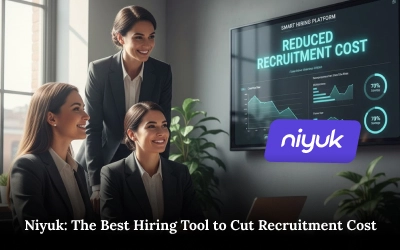
Discover Niyuk. Experience effortless screening and assessments. Book A Demo In today’s dynamic talent market, recruitment plays a significant role in driving the growth and success of modern organisations. Anyhow, the hiring tool can have a remarkable impact on a company’s operations and entire human resources budget as well. From advertising of job openings to onboarding new hires, these costs can rapidly add up, certainly when recruitment processes are not to the mark. We have the solution i.e. Niyuk for the same. In today’s era of smart recruitment software, businesses have the tools to simplify the hiring process, boost decision-making, and dramatically decline recruitment costs. With the use of AI-based screening, automated communication, and centralised applicant tracking, businesses can lower manual effort, boost accuracy, and really cut down non-required expenses. This innovative approach makes sure for companies not only to save money but also improve the entire recruitment experience. What Does Recruitment Cost Means? Recruitment cost is the total cost required for attracting, selecting, and hiring candidates during the full recruitment or hiring process. This covers a wide range of activities and resources contributing to the hiring process, whether they are internal / external to the organisation. Recruitment costs are generally categorised into 2 types: 1. Direct Costs These are the visible, immediate expenses directly relative to a role closure. They cover up job board fees, recruitment agency charges, advertising costs for jobs, background checking cost, travel reimbursements for candidates, and employee referral bonuses. They are typically easy to track and quantify. 2. Indirect Costs These are the less obvious but equally remarkable costs arising from the recruitment process. Indirect costs encompass lost or missed productivity because of the vacant positions, training activities, onboarding of new employees, time shared by internal HR staff on resume screening and candidate interviews and increased expenses due to a bad (or poor or non-deserving) hire. Effective workforce planning and budget control are dependent on monitoring and reducing these types of hiring expenditures. Realizing the average recruitment cost per hire enables organisations to set benchmark and strategize cost-effective recruitment working. Affordable AI-Driven Recruitment Implement our AI recruitment software to optimize your AI recruitment process. Book Demo Today What Is the Importance of Recruitment Cost? Recruitment is not only about recruiting candidates for the open vacancies. It’s a strategic function which may drastically affect your organisation’s budget and performance, as well. Knowing about the critical importance of recruitment cost supports you to take up best possible hiring decisions, smart resource management, and guide long-term business growth. Here’s why it’s vital: 1. Impact on the Overall HR Budget Recruitment may represent a large portion of an organisation’s HR cost. Advertising job roles, using paid services of recruitment agencies, running background checks, and onboarding all come at a cost. When hiring is not sufficient or happening again due to poor retention, these costs grow at high rate, leaving less budget for other key HR initiatives like employee engagement, training, and development programmes. 2. Influence on Time-to-Hire and Quality-of-Hire Recruitment cost directly effects on how fast you get in the fresh talent. The more time it requires the more hiring cost. This also increase burden on teams as well as more time wastage for the same. On the other hand, accelerating the process to cut costs can damage the quality of the hire, this leads to mismatched candidates and eventual turnover. A balanced hiring strategy is a key to cost control without doing compromise on the quality of talent. 3. Hidden Costs of Poor Hiring Decisions Not all recruitment expenses are well enough. Bad hiring decisions may result in hidden costs i.e. dropped productivity, low employee morale, increased supervision responsibilities, and extra amount of time spent managing performance issues. If the placed candidate leaves, the re-hiring and re-training again starts the recruitment journey or cycle, expanding the budget and juggling with team stability. All details about the applicant tracking system are not necessarily right. Some of them are myths. Let us discuss them here one after the other. What Are the Reasons of Added Recruitment Costs? If your average recruitment cost per hire feels unsustainably high, the following factors could be anticipating: Humanised hiring workflows: Depending on spreadsheets, emails, and data entry slows down the process and expands the risk of error. Lack of automation: Without collaborative tools, team’s experiences delays and miscommunication. Poor candidate experience: Long lasting processes and precise communication leading to high drop-out rates. High employee transit: A rushed hiring process mostly leading to poor matches and early exits. Heavy dependence on recruitment agencies: While they can be helpful, agencies may remarkably improve your costs if used as your primary process. Limited recruitment insights: Inadequate, incompitent data makes it tough to measure success or find the real bottlenecks, resulting in bad hiring decisions. What Function Does Recruitment Software Serve in Hiring? Recruitment software is becoming a game changer. It’s a digital platform crafted to manage and maximise every stage of the hiring process. Either purchased as an outperformed solution or made by a custom development company to meet certain organisational needs, recruitment software goes a step ahead by incorporating artificial intelligence, automation, and advanced analytics to maximise hiring efficiency. As per the 2025 HR Tech Report, businesses going with AI recruitment software have seen a 35% drop in the cost per hire and a 42% enhancement in time to fill. Key Features are: AI-powered candidate screening to grab top talent rapidly and drop down the manual workload. Automated communication for a genuine, engaging candidate experience. Centralised applicant tracking system to offer team collaboration and boost visibility Customization-friendly analytics dashboards to monitor real-time key recruitment metrics. Simpler integration with job boards, social media platforms for a bigger outreach. Inside compliance tools to meet data protection regulations such as GDPR How to Have the Right Recruitment Software? Getting the right recruitment software is tedious for developing a timely and cost-effective hiring process. The factors need to be considered. Here are key considerations to support your decision to go for a perfect recruitment software: Scalability and CustomisationOpt for a solution growing with your business and gives flexible customization, whether it’s collecting workflows or managing raised hiring volume. User-Friendly Interface and SupportAn easy, intuitive design supports your team to get started quickly. Sound customer support, training resources are very important for long-term success. Data Protection Laws (for Compliance)Be alerted to comply the software with the General Data Protection Regulation (GDPR) regulations. See features i.e. user access restrictions, data storage security, and compliance tools. Reviews from Users and Trial (Evaluation) PeriodsTry out the free trials to check and refer platform’s features and usability benefit. Check the reviews from the users to know real-world performance, support level, and reliability also. Your Search for the Best AI Hiring Tool Ends Here. Make the smart investment in AI hiring this week. Calculate Your Savings How Does Recruitment Software Aid in Lowering Recruitment Expenses? Recruitment software is made to ease the full hiring process, delivering remarkable cost savings across various areas of your recruitment strategy. Refer these tools here, which can directly drop down your recruitment costs: 1. Refining the Hiring Process Automation accelerates key stages, like candidate screening, interview scheduling, and required communication. By reducing delays, recruitment software conserves the time-to-hire, assuring about quick onboarding and lessen productivity loss. 2. Avoiding Dependencies on External Agencies Recruitment software easily permits or enables staff members to handle candidate sourcing, their resumes screening, and communication with them,
Enhance Your Hiring Process with Applicant Tracking System
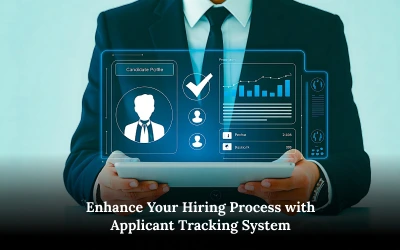
Discover Niyuk. Experience effortless screening and assessments. Book A Demo As per the latest reports in today’s corporate scenario, 93% businesses use an ATS, and the rest are still to reach for it. In this blog post, we have tried to capture the entire information as a guide regarding applicant tracking system (ATS). Let us know each and everything of this ATS and ATS software in this blog in further sections. What is an Applicant Tracking System? An ATS (applicant tracking system) is a recruitment goldmine, it takes care about handling all right from resume screening to candidate tracking. This recruitment system helps you attract top talent, assess candidates effectively, and simplify every step of the recruitment process. In the next section, we have tried to break down 5 main core functions of an applicant tracking system further here. 1. Resumes Filtering This feature is like your own personal assistant. It does the resume scanning for you, picking out the most criteria matched one – that may be skills, education, or experience. 2. Ranks Candidates An applicant tracking system ranks candidates based on their suitability with the job description, saving on time and effort for you. 3. Applicants Tracking To track the candidate in the entire hiring process, the candidate is always informed about the updated status of his interview, and he is always in the loop. 4. Improvises Collaboration Teamwork is smoother than ever. You can share notes, give feedback, and collaborate smartly with your team members. 5. Ensures Compliance This feature is for the safety, making sure that you always stay compliant with hiring laws, so that you could focus more on finding the perfect candidate. Now let us explore how this applicant tracking system really works, in the coming section. Ready to Skip Manual Screening? Niyuk ATS software brings smartness to your ATS Hiring. Book Demo Today How ATS Works? Step 1: An ATS Filters Resumes Based on Keywords In some earlier years, Recruiters has always issues. A mountain size of resumes unsuitable for the given job postings. The sifting becomes more critical for such numbers of resumes, when various job openings are there to fill up. This becomes a huge task. Before applicant tracking systems, recruiters had to physically scan each resume to see if it possesses the qualifications and experience required for a job. But such resumes full of unsuitable details and irregularities made recruiters helpless with their time wastage and efforts taken on the initial screening or shortlisting. So, it was a clueless work of hours for them! Here is the use of ATS comes in picture. Let us see what end effect it gives upon its deployment. Now, in the place of human filtering of every resume, the ATS does the heavy work. ATS filters and scans the resumes based on specific parameters such as keywords, skills, and experience. It also ranks candidates based on their matching with the job description. ATS in hiring eliminates all human guessing efforts and time wastage. Just a simplified process with some margins of error that really imitates human thought and supports recruiters find the perfect candidate each time. Step 2: ATS is Full of Challenging Questions for Easy Elimination This is the next step after filtering of many resumes. This is an optional step. In this, the recruiters either go for ATS software, or they simply skip this step. These question series can be of many types: either with answers to select by clicking on checkboxes or to select the right one multiple options by the candidates in the hiring process. This makes the sorting easy for HR recruiters, as they can select and make those candidates move further in the process, who has given correct answers to these questions. Those who have failed to give answers are easy to filter out at this stage now. This makes the further selection easier. Step 3: Applicant Tracking Systems also Scans & Sorts of Applicants In this step, Resume information parsing is done to sort and scan the candidates. Most of the ATS’ in the market have resume parsing features inbuilt. These kinds of software’s also study information in a resume but also allow recruiters to hotlist standout candidates. You can also write down short notes right on their profiles. It’s like a digital sticky note. If you want more in depth, the system enables you to configure customized keywords for scanning – i.e. educational background, specific skills, or any other criteria you feel valued. Recruiters could insist candidates for plag free, original resumes to improve the accuracy of the ATS’s parsing. This scanning and sorting feature enables you to have a quick review via resumes and line up interviews accordingly. Step 4: The ATS Tracks Candidate Journeys This is the next step after sorting of resumes. The applicant tracking software help in candidates tracking in your hiring journey via visualization format like dashboard to track them easy and fast. For example – if you are recruiting 20 candidates, your ATS will show you that- each candidate is a fresh applicant, or they are in the first or second interview stage. Even if a candidate doesn’t make the move, they will still be there in you recruiting database for future positions. Step 5: ATS Maintains Timely Communication As the hiring process is going on, you can keep everyone informed about the same. The communication between applicants, hiring managers, and your own team become a very busy task. ATS serves with comfort here. This tool does automation of your communication tasks. It makes easy to update clients about job openings or give follow-up emails to candidates. The result is a more effective communication process with less effort is required. Which Are the Misconceptions about Applicant Tracking Systems? All details about the applicant tracking system are not necessarily right. Some of them are myths. Let us discuss them here one after the other. Misconception 1: An ATS Removes Human Involvement ATS improves human interaction in the recruitment process during the entire journey. Recruitment automation enables recruiters to focus on assessing candidates’ soft skills, cultural fit check, and other human-centric factors, which would not be possible if they were mainly worked on manual sorting and tracking. Misconception 2: An ATS only Prefers Keywords An ATS considers various factors such as work experience, education, and skills, even though keywords are very important. A suitable and self-sufficient resume is more important than many keywords usage. Misconception 3: Candidates are not Treated Fairly with an ATS This is the biggest ever myth about ATS. ATS treats all resumes equally to provide the fair practice. It makes sure that each application is seen and assessed based on the same criteria, improvement for a fair and unbiased process. Misconception 4: An
How Automated Interview Scheduling Changed Manual Hiring Back-and-Forth
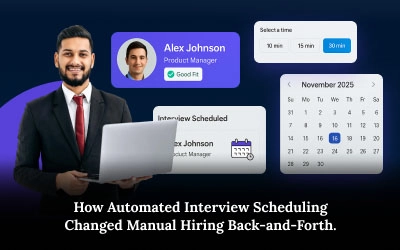
Discover Niyuk. Experience effortless screening and assessments. Book A Demo Manual interview scheduling for the headhunt of the ever-best talent for every required role. But manual scheduling has a lot of flaws like delays, inefficiencies and loss of opportunities to grab top talent. For HR professionals and recruitment managers, interview scheduling is not only time –taking but also puts on extra administrative burden and causing scheduling conflicts. This ultimately, damages the candidate satisfaction. Automated Interview Scheduling is the master key for all such HR people to save their valuable time and efforts. Niyuk comes up with some transforming approach about interview scheduling. It makes life easy for the recruiters by simplifying the entire process from resume screening to assessment of the candidate with the help of AI technology. With the use of Niyuk, HR recruiters not only able to simplify the operations but also drops down time-to-hire, saves remarkable work time and efforts, to divert themselves on more priority tasks. In this important blog article, we are going to discuss about the transformation of conventional manual interview scheduling over automated interview scheduling. Let us unfold this discussion in following sections here. The Bottlenecks in Manual Interview Scheduling Manual interview scheduling is the main hurdle in many organisations today. HR professionals and recruiters use to work for long lasting hours just in mailing candidates for discussing the suitable interview schedules, arranging their interview slots with the calendars and getting their confirmations after such hard efforts. This complex coordination mostly shows: Last-moment cancellations or no-shows due to lost interview chances Prolongness in candidate’s journey via the hiring process Double(multiple) bookings and scheduling hassles Negative candidate experiences due to inefficient communication Bulk workload on recruiter and administrative burden Such types of inefficiencies hamper HR resources and risk of top talent loss to active competitors. Our Automated Interview System Runs 24/7 Vetting skills for your team Start Automating Interviews Today with Niyuk! What is Automated Interview Scheduling and How it Functions? Automated Interview scheduling is a software solution removing humans from the calendar-coordination loop in recruitment process. It is a software allows candidates for self-schedule and reschedule interviews without recruiter’s intervening efforts, as per the industry analysts. It acts in below 4 things: Calendar sync in real-time The application synchs with Google or Outlook calendars and collects open and occupied time slots without considering event specifications. Mutual-availability engine The mutual-availability engine which compares the candidate’s time zone and the interviewer’s schedules to recommend only options that are comfortable for both parties. Self-service booking link Candidates get a branded URL or SMS that promptly updates all stakeholders’ calendars. Clever follow-ups and reminders SMS, emails are sent an hour before the call and 24 hours in advance. Benefits of Automated Interview Scheduling In actual, a timely shift from manual to intelligent interview scheduling gives more constructive benefits for HR staff, recruiters: 1. Recruiter Workload Interviews scheduling automation and prompt candidate communication makes recruiters free from routine, time taking administrative tasks, permitting them to focus more on strategic talent evaluation and engagement. 2. Higher Interview Completion Rates Automated reminders and multiple-channel communication options reduces no-show rates substantially, making sure for smooth hiring channels and fast decision making. 3. Accelerated Time-to-Hire Simplified scheduling increases candidate progress, consumes time effectively and giving edge to the HR people to close certain positions in today’s smart job market. 4. Enhanced Candidate Experience Gives flexibility to the candidates to plan their own interview schedules and set proactive reminders. This improves their satisfaction level up too much extent. These benefits directly impact recruitment results, making Niyuk as a strategic investment for HR leaders expecting important improvements in hiring efficiency and quality. Types of Automated Interview Scheduling Tools There are different types of automated interview scheduling tools are available. Every type comes with some unique features and benefits. Here are some popular types: 1. Calendar Integration Tools Calendar integration tools get integrated with your current calendar software, like Google Calendar or Outlook. These tools allow recruiters to share their availability status with candidates. Candidates can view, choice for their available interview time directly from the calendar of recruiter. Calendar integration tools are easy for use. They may save time by removing the need for dual-sided communication for a while or for a longer time than usual. Calendly is a popular calendar integration tool allowing recruiters to share their calendar availability and do changes in their booking page with their brand colours and logo. Candidates may select a convenient time slot for them, which gets added automatically to the recruiter’s calendar. This tool helps for auto reminders sending to candidates before the interview. 2. Chatbot Tools Such tools are based mainly on artificial intelligence (AI) technology to interact with candidates and schedule interviews. These tools answer basic queries, offer candidates feedback rapidly, and may help in simplifying the recruitment process. Chatbots can also help to deliver a better candidate experience by 24/7 availability and offering rapid and informative replies to candidates. 3. Interview Scheduling Platforms Interview scheduling platforms gives a centralized system for interview scheduling and hiring process management. These platforms offer features – automated reminders, confirmation status tracking, and scheduling data insights. They are especially useful for big sized organizations those need to manage multiple interviews across various hiring teams and locations. Well, Niyuk takes care about all such requirements for organisations as well as recruitment agencies. Selection of Right Automated Interview Scheduling Tool To select an automated interview scheduling tool, it’s crucial for considering many factors for making sure to pick a correct scheduling tool meeting required for your organization. Think about those features vital for the recruitment process. They may vary widely between various interview scheduling tools. So, it’s important to get a tool with features you are looking for. Suppose you schedule interviews frequently with candidates in various time zones, you may need to think a tool with a built-in time zone converter. And, if you are really managing a high-volume recruitment process, you can wish to look for a
Smart Hiring with the 6 Essential Recruit CRM AI Features
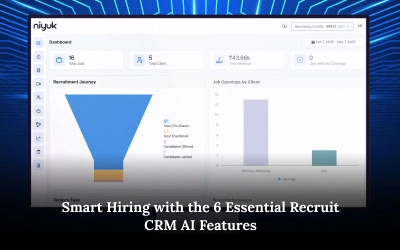
Discover Niyuk. Experience effortless screening and assessments. Book A Demo Automation and AI are the trending technologies supporting every corner of professional world as well as helping in transforming our lives, too. The need for AI based recruitment services are for innovative ideas for how to connect with candidates by the HR stakeholders for the entire recruitment process smartly and in less time. Recruit CRM AI Features are at the top development of this technology boom. It has got quality features helping recruitment people seamlessly with great results. Specifically, a Recruit CRM powered by intelligent features is the AI Assistant your team needs to break free from manual work and focus on high-value human interactions – like closing deals and engaging candidates. This isn’t just about using technology; it’s about using technology designed to make your human team more influential to deliver the high-quality results in hiring. Here are the six essential recruit CRM features that will transform your agency’s workflow, starting with the core recruit CRM AI features that drive unparalleled efficiency. Let’s unleash the same further. Tired of Coordination Delays? Implement Automated Hiring and speed up your time-to-hire. Start Automating Interviews Today with Niyuk! 6 Niyuk Recruitment CRM AI Features The biggest hurdle in any recruiting firm is the very big volume of data, which is to be reviewed. The humanised process of profiles matching to client needs is time-taking, prone to human error, and delays the whole placement process. Niyuk’s Recruitment CRM applies built-in intelligence to create the tough decisions about who to spend time with, saving recruiters unmeasured hours and accelerating the delivery of qualified shortlisted candidates. 1. AI-based Resume Screening: Quality Shortlist in Minutes Imagine having a super-fast, highly specialized resume reviewer working 24/7 for you. That’s the power of this main recruit CRM AI feature. When you upload resumes, the system starts working promptly, shortlisting candidates in minutes. Just like simple keyword search tools, Niyuk’s AI-based Resume Screening does deep contextual research. It knows industry jargon, compares a candidate’s career progression against the fixed path for a given role, and matches their experience to your client’s distinct cultural or technical criteria. Our screening highlights fit, risks, and red flags. For example, if a job needs five years of hands-on Python experience and the resume only briefs a basic coding camp, the system flags the risk. Similarly, if a candidate’s background perfectly matches the client’s special industry niche, the high fit is immediately indicated. This means your consultants spend their whole time interviewing the right talent – without any need to read each line of hundreds of CVs. This dramatically reduces time-to-hire and makes sure that each strong candidate gets seen, keeping all context about the initial screen in a centralized place. It’s the ultimate tool to make sure your agency gives a qualified, quality shortlist every time. The goal is to optimize the manual element by freeing it from the robotic work of first review. 2. AI Assessments & AI Interviews: Objective Evaluation at Scale Once screened, the next step is deep assessment. How do you assess situational judgment, soft skills and technical experts consistently across various candidates? Niyuk makes your hiring funnel simple with strongest AI-powered assessments and video interviews. With this service, you can quickly and easily screen top candidates and offer your customers as a more deserving, qualified shortlist of talent. Our system facilitates customised, role-specific assessments measuring the precise abilities and knowledge required for the position in place of generic tests. Video-based situational questions could be used in the assessment to track communication style and leadership potential for a high-stakes managerial position. Pair this with Niyuk’s AI interview assistant features, and you suddenly gain an objective layer of evaluation. This interview ai assistant may handle initial screening questions, analyse linguistic patterns related to confidence and clarity (not just tone), and record replies for later review and calibration with hiring managers. This enables your consultants to focus only on late-stage interviews were manual connection and cultural fit dialogue matter most. It’s the closest thing to having a dedicated AI Assistant managing your early funnel, giving candidates a latest, consistent experience while giving your agency objective, data-driven insights. This makes sure you satisfy the complex requirements laid out in any recruitment CRM job description. This feature acts as the Relationship Hub of the Candidate and Customer Journey excellence. A great Recruitment CRM does more than just monitor applicants; it makes relationships. In the competitive staffing world, your communication quality often determines if you win the placement. These features assures that no candidate or client ever feels forgotten, building your agency’s professional reputation. 3. Candidate Tracking: Never Lose the Connection Threads A forgotten follow-up or misplaced note can cost you a placement in a busy agency with lots of clients and consultants. Your team can see a clear, visual representation of every hiring process with Niyuk’s Candidate Tracking. You can see each stage, from first touch to offer and joining, along with auto reminders for follow-ups, feedback collection, and documentation. When a candidate’s status changes (e.g., the client requests a second interview), the system gives an alert, ensuring prompt action and communication. This feature removes the fragmented reality of using various tools. No more lost updates, missed call-backs, or searching via old email chains. When a candidate calls, any recruiter can pull up their file and see exactly where they stand, what they’ve been told, and the feedback received. This level of organization is the ready platform of a positive candidate and client experience, proving that your agency is professional and reliable(trustworthy). It’s a core component of required recruit CRM features. 4. Centralized Talent Database: Your Agency’s Goldmine Your database is not just a set of old resumes; it is your most precious asset. The Centralized Talent Database changes passive contacts into active business assets, allowing you to use your history instead of regularly starting from scratch. You can bulk-upload your existing database, smoothly add new profiles from the daily sourcing, and
Automated Interview Scheduling: The Assured Secret to Faster Time-to-Hire
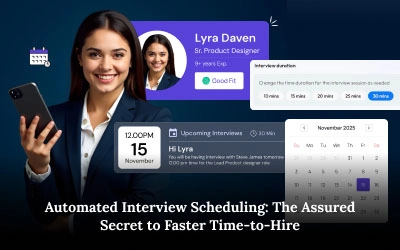
Discover Niyuk. Experience effortless screening and assessments. Book A Demo Fast and efficient hiring with quality candidates is a need of the hour in today’s time. This helps in right moment engagement, prompt interview schedules and timely updates to keep them informed. The right solution is – Automated interview scheduling. Upon successful shortlisting of a candidate, the real task of suitable time for interview schedule appears up for the HR desk. Both sides time suitability is the main factor to consider. Calendar and time availability must be checked for both sides. More emails for this task can be written towards the final confirmation. Sometimes, one side wishes to change the fixed appointment at the last moment. This leads to a major delay in this task. These delays are frustrating for both ends. According to Cronofy’s Candidate Expectations Report (2024), 42% of candidates report dropping out of the hiring process due to long scheduling. Slow scheduling cost time as well as best talent to lose forever. This calls for a more simplified and automated interview scheduling process to help you to drop off time-to-hire, free up many productivity hours, and give candidates a personalized, modern experience. Interview scheduling automation allows interview management more efficiently without any active human coordination. Availability Time clock can be set for the selection of the candidates as per their convenience. The system updates calendar automatically, manages time zone differences, and sends reminders, making sure about timely interviews to happen. This not only saves many administrative works but also minimises errors like double-bookings, and gives candidates a seamless, more predictable hiring experience with automated recruitment. Time-to-Hire Concept and It’s Importance Time-to-hire calculates the days between when a candidate enters in your recruitment process till, they accept an offer. By simplifying recruitment and lowering hiring delays, organisations may make candidates engaged and drop-down recruitment costs significantly. It’s tough to differ in time-to-hire and time-to-fill: Time-to-hire: It is the measured time limit from a candidate arrives in your recruitment drive channel and when he gets an offer in actual. Time-to-fill: Sums up the total duration from the job posting is done until it’s filled up, with both sourcing and hiring. A long hiring process gives more damage than anticipations. Finding ways to drop down time-to-hire is tough because: It improves the risk of losing top talent to close competitors It lowers down productivity rate and affects revenue It raises your cost per hire (currently averaging about US$4,683 in 2025 globally) According to a 2025 survey by HR Lineup, the worldwide average time-to-hire is 36 days, and various employers report talent shortages, making hiring speed more is becoming critical than ever. Stressed of Coordination Delays? Implement Automated Hiring and speed up your time-to-hire. Start Automating Interviews Today with Niyuk! Interview Delays Affects Hiring Results At actual, scheduling looks like a tiny task. But it forms candidates’ perception of your company and indicates the smoothness of the hiring journey. There are Problems with Traditional Scheduling: 1. To-and-fro Emails Every interview request normally propels a chain of emails between you, your hiring manager and the candidate. This slower the process and spoils measurable time which could be useful in evaluating talent. 2. Scheduling Conflicts Upon the availability of candidates, hiring managers often tight calendars. This forces for restarting the cycle, causing inefficiencies and delays. Poor Candidate Experience: Candidates normally receive many follow-up emails or to deal with last-minute rescheduling. They must wait for a long time for the final confirmation. This uncertainty makes stressful situation and replies poorly on your employer brand. 3. Time-bound Human Coordination Other than working on certain hiring tasks like talent evaluation or relations-building, you as a HR/recruitment person, become only a schedule generator. Almost 35% of the time is wastage in the last year only in humanised scheduling task. 4. High Risk of Errors With number of human steps, the double-booking issue, mismatched time zone, or improper invites increase. These errors lead to wastage of time and can damage candidate trust. 5. Global Hiring Becomes Messy For remote or international candidates, time zone conversions and availability matching make additional challenge, making manual scheduling nearly impossible to measure. These Problems Affect Directly on Hiring End-Results: 1. Candidate Drop-Off Candidates don’t prefer for waiting. If you’re working slowly in the process, you may lose them. 2. Employer Image Candidates mostly relate slow interview process with bad organizational culture. Their enthusiasm for the role may get down, even though they are in the process. 3. Recruiter Work Volume Instead of talent engagement, recruiters spend hours in administrative hurdles. This lowers their ability to fill pipelines smoothly. 4. High Risk of Errors With so many manual steps involved, the double-bookings, missed time zone adjustments, or wrong invites may rise. These mistakes spoils time and may damage candidate trust. 5. Global Hiring Becomes Tedious For remote or international candidates, time zone conversions and availability matching create additional complexity, making manual scheduling nearly impossible to update or improve. These Problems have a Direct Impact on Hiring Outcomes: 1. Candidate Drop-Off Candidates don’t like to wait for interviews. If your interview process is very slow, you are going to lose them. 2. Employer Reputation Candidates mainly resonate slow scheduling with lowered level organizational culture. Even if they stay in the process, their interest for the role may drop. 3. Recruiter Workload Without getting engaged with the talent, recruiters spend many hours in administrative work. This reduces their ability to fill pipelines effectively. In an industry where speed and efficiency matter more than ever, interview scheduling delays can quietly derail hiring success. Upgrade your workflow with smart tech. Leverage AI Hiring Process tools for perfect Automated Scheduling. Request A Demo Now! Statistical Facts to Note Find here the major statistical facts we are discussing in this blog in a summarised chart below: Metric Value Implication for Manual Scheduling Source Cited (Year) Candidate Drop-off Rate (due to long scheduling) 42% Almost half of candidates are lost because the scheduling process is very slow. Cronofy’s Candidate Expectations
The Ultimate Guide to Select the Best Recruitment Agency CRM in 2026

Discover Niyuk. Experience effortless screening and assessments. Book A Demo Recruitment team of your recruitment business needs to have lot of email communications and correspondence with clients and various candidates every time. This makes the team completely busy in this huge communicational activity. So, it must be centralised for easy management of the communicational flows. Here the role of Recruitment Agency CRM comes in the picture. CRM for recruitment agency is a new ray of hope. Latest recruiting CRM tools are excellent performers apart from handling and management of this type of data. These robust systems not only simplify the candidate communications but also automate schedule of interviews. The systems elaborate your hiring pipeline and support in key metrics monitoring,espscially for metrics like time-to-fill and rate of placement. In this relevant blog from niyuk, you will get the entire guidance explaining everything you need about recruiting CRM systems. A best crm for recruiting is a must today. Here we will be explaining implementation strategies and analytics, apart from core features, which will be transforming your existing hiring process. Concept and Importance of Recruitment CRM at Present A recruiting CRM – Candidate Relationship Management system is a specialised platform building and nurturing long-term bonding with candidates. This applies to both existing job seekers and idle talent. Recruiting CRM is a centralised hub which is managing the complete recruitment framework and positive connections with prospective talent. What is the Concept and Main Functions of Recruiting CRM? A recruiting CRM functions as a centralised database to support you identify, contact, and assess candidates while retaining connections irrespective of the hiring results. The core functions are: Building and maintaining talent pools with respect to time Accurate calculation of recruitment performance Communication workflows automation and follow-ups The complete recruitment process management from application to hiring Organisation and monitoring candidate details in a centralised database Allowing individual level of communication with candidates Offering analytics and reporting skills Integration with other recruitment tools and job boards The same conversational AI technology now powers AI-driven client support platforms that handle inquiries across conversational, voice, and messaging channels. In the present time, recruiting CRM automates complex tasks such as task sharing and data entry. This substantially drops down manual errors. It supports your team to focus on meaningful candidate interactions instead of administrative busywork. Recruiting CRM is a polished software system which really simplifies your recruitment operations by effectively monitoring and controlling or managing candidate relationships. This required component of your recruiting process supports in candidate data management, offering personalised outreach, utilising latest analytics to improve your hiring strategies. Journey of Recruiting CRM Since 2020 The awakening of recruitment CRMs has been fabulous. These systems mainly worked as easy tools to manage candidate data and track communications before 2020. By 2025, they have come up as required components of talent acquisition. Latest and trending Recruiting CRM like Niyuk now applies advanced AI algorithms for candidate matching, customised communications and predictive analysis. CRM for recruiting work as comprehensive platforms offering end-to-end functionality to drive smart, analytical decision making. The highest change between 2024 and 2025 has been the rise of comprehensive talent intelligence platforms. These luxurious systems analyse large amounts of data from various sources. They make an informal view of the talent canvas and allow more informed decisions. Stop Juggling Across Spreadsheets Simplify candidates and customer interactions with the perfect Recruitment Agency CRM with Niyuk See How It Works Features of Modern Recruiting CRM Modern Recruiting CRM tools have developed to handle the complexities of today’s talent hiring world. These platforms transform how recruiters connect with prospective candidates and manage hiring processes. A SHRM survey in 2022 detected that 64% of HR professionals use AI or automation to analyse or screen resumes and 69% to communicate with applicants in the entire interview process. Features like AI-based Talent Matching and Smart Candidate Engagement Chatbot make it viable while using the system. Also, there are various useful features available in the Recruiting CRM, like job portals for best reach and recruitment marketing, client-side dashboards for the best user experience, and AI based video interviews. The Top Benefits of Recruiting CRM Implementing the right CRM recruitment system gives remarkable improvements for your recruiting agency or team. Find here some of the biggest benefits of the recruiting crm brings to the table. 1. Better Candidate Experience Recruting crm keeps your talent resource database fresh, updated and mobile friendly with website portals. This results in happy and satisfied candidates with high rate of retention. 2. Speed & Efficiency CRM for recruiting gives the automation of time-taking tasks i.e. reference checks, onboarding, and compliances tracking. Recruiters may emphasize on filling roles, not just forms. 3. Data-Based Insights You can real-time analytics on job progress, candidate talent pool quality, and consultant’s efficiency. Search top performers and sourcing channels delivering results. 4. Scalability Catering of high candidate volumes, clients, and placements without increasing team people or surrendering on service quality. 5. Compliance Confidence CRMs preserves right-to-work documents and delicate data safely, lowering risk and giving peace of mind. Agencies using efficient CRM recruitment solutions typically see fast time-to-fill, strong client and candidate engagement, and great overall profitability. There are numerous benefits of the Recruiting CRM, and It supports you in various ways, like saving the working time, money, and energy in efforts of the hiring team. What are the Major Differences between Recruiting CRM vs ATS? The difference between a basic applicant tracking system (ATS) and a comprehensive recruiting CRM comes across its relationship-building capabilities. It is believed that the ‘relationship’ factor shows that recruiting people who contribute to the company’s vision, values and culture is more vital than just filling a position”. An Applicant Tracking System (ATS) is a workflow and compliance tool managing applicants via hiring. It tracks applications for certain job openings. ATS and recruitment CRM are both valued. They serve different objectives. As compared to ATS vs Recruiting CRM, a Recruiting CRM enhances your sourcing efforts by grabbing passive candidates ahead of what you required. It maintains an environment of all
An Overview on Challenges of CRM in 2026

Discover Niyuk. Experience effortless screening and assessments. Book A Demo You can save lot of manual hours and cost on data entry work by removing all Challenges of CRM Software. Manual tracking needs more countless hours every week without any proper recruiting CRM system. Their takes for the poor candidate experiences and long turnaround times without reason. Mitigating recruitment challenges through effective CRM implementation gives more benefits than only time savings. As per the industry experts, revising your approach becomes unavoidable growth of business disadvantages when current solutions are going of no use. A well- recruitment CRM clubs all records with automates repetitive tasks, real-time updates and allows individualised candidate engagement. It lowers paperwork in actual and releases your HR people for more human-centric duties. Successful recruitment CRM selection and deployment begin with strategy, and very important is recruiting CRM information. CRM recruiting software or recruiting CRM software is a major trend today. https://vimeo.com/1151860217?share=copy&fl=sv&fe=ci Challenges of CRM Let us have a look on major challenges of CRM and how they can be controlled or avoided by the effective use of recruiting CRM to make HR teams life easy and more efficient to accomplish their hiring goals with planned objectives. 1. Time and Operational Inefficiencies The conventional recruitment process incurs measurable time and drops down productivity. HR people mostly spend 1 to 2 hours posting a job on various websites and handling their remaining tasks. According to industry research, HR workers in large companies, around 82% commit that they must work hard for the same but required repetitive tasks. These inefficiencies make tangible effects: Prolonged hiring timelines (up to 50% long compared to automated processes) Lowered recruiter morale, productivity High risk of skipping top candidates who are normally off the market within 10-14 days The impact extends above just time. Like, manual processes mostly result in errors, inconsistencies, and disconnected detail flow tarnishing your efficiency and candidate experience. 2. CRM Automation Speed Issue Recruitment CRM software handles this challenge head-on by automating your highest time-consuming tasks. Automation makes key recruitment tasks easy, like resumes screening, setting up interviews, and follow up with candidates; all done automatically. This allows your team focus on building strong relations. A well-deployed recruitment CRM is a game-changer for HR. Automated processes makes sure for the consistent quality and remove non-required tasks. The hiring process will not affect your recruiters work, there work will be improved by focussing more on more complex and required tasks. 3. Recruiting CRM Drops Down Paperwork and Admin Burden The administrative load in regular recruitment methods is mainly responsible for dropping down productivity. A recruitment CRM makes sure for the digital safety of documents, and it removes the need for paper. Prospects fill their forms via the web, and so, automatically inputting their data into the shared files. Automation drops down administrative load via: Simplified compliance documentation Automatic document collection and new hire checklists Centralised database of all candidate interactions The hiring team may use the time spent on admin tasks to make better relations with candidates or highlight on other necessary hiring decisions. With CRM automation, your recruitment process may become rapid and smart. It would transform the slow, paper-based work into a faster automated system focussing more on relationships. 4. Data Management and Accuracy Challenge Improper data handling is expensive. Incorrect information costs businesses around £10.24 million a year as per some study report by QX Global Group. Although, it’s still one of the highest recruitment challenges that mostly getting overlooked. This may lead to a bad quality of hiring and recruitment costing a huge amount of money to the respective organisation in the long run. Recruiting CRM handles this very nicely. Stop Browsing Spreadsheets Implement Top-Tier Recruitment CRM Solutions Today You Can Hire with Niyuk 5. Problems with Outdated or Duplicate Data Every year almost 30% of the candidate data gets outdated, making big bottlenecks in your hiring process. Old contact details, Invalid certifications, and incorrect job titles waste lot of time as well as they basically obstruct hiring. Consider what happens when: Recruiters waste hours reaching candidates with invalid information Without current job roles or skills data, matching tools gets failed Double entries force recruiters to review the same candidate’s many times This disorganisation remarkably deflects your ability to search qualified talent faster. Additionally, duplicate profiles lower database search speed and create mess for your recruitment team. CRM automation addresses this challenge. 6. Real-time Updates and Centralised Records A recruitment CRM solves these challenges by collecting centrally all candidate information in an accessible location. Instead of juggling between different websites, tools, or spreadsheets, your CRM becomes a source of truth for all data of candidates. Real-time recruitment parameters show prompt insights for open positions, candidate status, and hiring development. This central approach allows you to monitor interactions, control communications, and stay on upside of requirements via one common platform. 7. Candidates Experience and Data Accuracy Challenge Accurate data really improves the candidate experience. Basically, it avoids the frustration of getting with unsuitable, odd opportunities to candidates who have already shifted their industries / locations. This improved data management leads to fast, very correct matching between candidates and roles resulting in high engagement rates and more positive experiences via the recruitment process. 8. Problematic Disconnected Systems and Tools Running between multiple disconnected recruiting platforms makes a technological issue slowing down the hiring process. This fragmentation is a significant bottleneck to efficiency in today’s recruitment landscape. Below are the major issues with non-integrated platforms: Working with non-integrated systems makes you to regularly switch between applications, copying and pasting information between platforms. This disconnected approach makes data silos, not required complexity, and remarkable inefficiencies. The consequences are clear: Too many separate tools leading duplicated work and constant tab-switching Non-integrated financial processes raise errors and take your organisation to audit risks Isolated systems make tracking candidate interactions nearly impossible As per experts’ opinion, separation of recruitment software from email systems is not the solution. Even though many recruiters still work in the same way.