
How to Choose the Best Automated Payroll Processing (Compared)
Discover Niyuk. Experience effortless screening and assessments. Book A Demo Stop wasting hours on spreadsheets. Modern HR shouldn’t be a headache. But payroll often turns into one anyway. If your month-end still means frantic calculations, duplicate entries, and that low-level panic about tax or compliance errors, you’re not alone. Payroll mistakes are expensive. In fact, payroll errors cost U.S. employers billions every year through overpayments, underpayments, penalties, rework, and lost productivity. That’s not a small admin problem. That’s a business leak. Choosing the right automated payroll processing software is the difference between a clean, controlled workflow and a messy patchwork of tools that keeps your team stuck in manual mode. In this guide, we compare the top options, show you what actually matters, and explain why the best payroll setup isn’t a standalone tool. It’s a complete system that covers the full employee lifecycle, from sourcing to salary. The Old Way vs. The New Way: Why Automation is Non-Negotiable Manual payroll is the old way. If you’re still exporting attendance data, checking formulas, and moving numbers between tools, you’re doing too much work for something that should already be automated. The Old Way: Separate tools for attendance, leave, payroll, and hiring. Manual calculations that create avoidable errors. Compliance handled reactively after something breaks. HR teams stuck doing repetitive checks every month. The New Way (Niyuk): One connected platform: Payroll flows directly from your HRMS software Less manual work: Attendance, employee data, leave, and salary all stay in sync. Faster payroll cycles: Review, approve, and process in minutes. Full employee visibility: Payslips, records, and updates live in one place. Built for the full lifecycle: From AI sourcing and assessments to onboarding, payroll, and performance. This is where Niyuk stands apart. Tools like Gusto or Rippling can help with payroll. But payroll alone is only one part of the mess. Niyuk gives you the full stack, from sourcing to salary, inside one AI-powered system. 4 Must-Have Features in Automated Payroll Software Don’t get distracted by shiny dashboards. If you’re comparing payroll tools, focus on the features that actually remove work. 1. Zero-Touch Tax and Compliance Payroll is not just about paying people on time. It’s about staying compliant every single cycle. Your software should automatically calculate taxes, deductions, and statutory contributions without forcing your team to double-check everything manually. At Niyuk, compliance is built into the workflow with audited algorithms and automated logic. That means fewer mistakes, fewer surprises, and far less back-and-forth. 2. Deep HRMS Integration A standalone payroll tool sounds fine until you realize your data lives in five different places. The best payroll processing sits inside a complete AI-powered HR automation platform, where attendance, leave, employee records, and payroll all work together. 3. Employee Self-Service Your HR team should not spend half the week answering the same payroll questions. Employees should be able to access payslips, update details, and check records on their own. Less chasing. More control. 4. Scalability Without Tool Sprawl As your team grows, scattered tools become expensive and annoying fast. You need software that can handle more people, more locations, and more complexity without forcing you to stack new apps on top of old ones. That is why Niyuk is built differently. Payroll is not a bolt-on feature here. It’s part of an end-to-end employee lifecycle platform that includes AI Sourcing, AI Assessment, AI Interview, ATS, HRMS, Payroll, and Performance Management. One system. One pipeline. Far less chaos. Comparison: Standalone vs. Integrated Solutions When choosing your software, you’ll usually run into three categories. The trick is knowing whether you’re buying a payroll tool or fixing your whole workflow. Why the “Niyuk Way” Wins Tools like Gusto or Rippling can solve one part of the problem. But modern HR is bigger than payroll. You still need to source talent, screen candidates, move them through a pipeline, onboard them, manage attendance, run payroll, and track performance. Doing that across multiple tools creates delays, duplicate work, and zero visibility. Niyuk gives you one AI-powered platform for the entire employee lifecycle. Here’s what that means for your team: Radical efficiency: Cut repetitive admin and reduce time-to-hire and time-to-payroll. 24/7 engagement: Keep candidates moving with always-on, personalized outreach. Bias-free hiring: Use audited AI systems to support fair and consistent decisions. One source of truth: Stop switching between disconnected tools just to complete one workflow. In short: if you’re comparing payroll software, don’t just ask, “Can it process salary?” Ask, “Can it remove operational chaos?” How to Evaluate a Payroll Provider: A 3-Step Plan Stop guessing. Start pressure-testing. Step 1: Audit Your Current Workflow Map your current payroll cycle from attendance to payout. Count the tools, handoffs, clicks, and hours involved. If your team is still doing manual clean-up every month, the process is the problem. Step 2: Test the Compliance Engine Ask one simple question: “What happens when regulations change?” If the answer includes manual updates, support tickets, or delayed patches, that is your red flag. Step 3: Check for Hidden Costs A low sticker price means nothing if every extra step costs more. Look for transparent pricing and a platform that replaces multiple tools instead of adding another one. ROI Calculation: Is Automation Actually Worth It? Short answer: yes. Here’s the quick way to think about it: Hours saved: How many payroll hours does your team spend every month? Error reduction: What do mistakes, rework, and penalties cost you today? Tool consolidation: How much are you paying for separate HR, payroll, and recruitment systems? Faster hiring-to-payroll flow: How much friction disappears when one platform handles the full journey? If automation removes even a few hours per cycle, cuts error rates, and replaces scattered software, the ROI shows up fast. Implementation Best Practices Want a smooth switch? Keep it simple. Clean your data first: Fix employee records before migration. Start with one workflow owner: Give one person clear accountability. Run a parallel cycle: Test payroll once before going fully live. Train managers early: Fewer questions later. Choose an integrated
7 Best Applicant Tracking Systems for Hiring in 2026
Discover Niyuk. Experience effortless screening and assessments. Book A Demo AI based hiring in 2026 works in favours of faster team recruitments. A strong candidate who applies on Monday has two interviews scheduled by Thursday and an offer in hand by Friday. If you are still processing on excel spreadsheets, email communication, and calendar scheduling, you are losing suitable people and lot of time on conventional hiring. Exactly here, the best applicant tracking systems come in picture as today’s latest hiring technique. It is rapidly adopted by modern HR teams. Let us have an eye on the statistical figures with the use of best ATS software by the HR recruiters here: Almost 94% of recruiters have agreed that ATS has saved there hiring time and some processes. 93% among recruiting professionals are ready to adopt ATS at their end today. 99% of Fortune 500 companies already using one ATS. Small and mid-sized teams are catching up fast because they have observed that, their competitors are using good ATS systems and acquiring more quality candidates fast than them. The challenge is that all ATS systems are not equal in structure. Some are light tools for teams with less than 10 open roles. Others are enterprise platforms which takes time to set up. Sourcing, screening, assessment, scheduling, compliance, and analytics in one place with a small group platform which your team will use every day. This blog article explains about , what each one does well, what to look for, and how to select the right fit for your organisation from the given list. First let us know the basic concept of ATS. What is ATS? Application tracking system software or ATS recruiting software is a recruitment software managing hiring from the job posting till the moment an offer gets accepted by the candidate. It preserves and manages candidate data, automating time-consuming steps like resume review and interview scheduling, and keeps every member of your hiring team working on the same information base equally. Good ATS systems go ahead of a resume database. The best ones help you to create and distribute job postings across dozens of boards at once. They also parse incoming applications automatically, run well-designed skills-based evaluations, manage background verification, and check out real-time analytics so you always know where your process progress stands. When talent acquisition systems are working properly, your recruiters incur their time on discussions and decisions, and not on administrative work, that a workflow could handle. These platforms are available for each company size and industry. Startups build well designed hiring from their first role. Enterprise talent acquisition systems manage hundreds of openings across various departments and global locations at a time. Staffing agencies run high-volume placements across various clients without the issues. The common communicational platform is the same requirement: a system where jobs, candidates, feedback, and decisions all are gathering. Refer the Best Applicant Tracking Systems Find the right fit for your hiring needs Make Each Hire fast with Niyuk How to Choose the Right ATS for Your Organization? Find here the main aspects for selecting the most suitable applicant tracking system for your enterprise here: 1. Start with your actual bottleneck Mostly hiring problems arise from four main areas: sourcing and posting, screening and organization, scheduling and coordination, or team feedback and assessment. Check out where your process slows down with the available platform. 2. Match the tool A small team of three people hiring for around ten roles a year has different requirements than a big size talent acquisition team organising 300 simultaneous openings. The best ATS systems for small teams are fast to deploy and easier for non-recruiters (even admin person) to use. The right ATS systems for large operations to handle tough workflows and compliance requirements without further breaking down. 3. Run one actual role via ATS One full hiring cycle tells you more than any demonstration or a sales call. You can post a job, do screening of applicants, schedule interviews and send candidate updates as well as collect feedback via the platform. 4. Confirm the integrations Calendar synchronisation, email integration, job board distribution, and background screening handle most of the daily recruiting coordination. Make sure these work proper and neat. 5. Think about where you are heading Switching to ATS platforms in time is a wise decision at this moment. If you do it later, then it will be hectic for your team. When assessing trending ATS solutions for growing businesses, select for the hiring volume and complexity you need in 12 to 18 months. Let us explore them one after the other here. 7 best Applicant Tracking Systems in 2026 Get well verse with the best 7 top trending ATS’s of 2026 here. We have tried to elaborate each one of them with their suitability and strong features. 1. Niyuk ATS Niyuk ATS (Applicant Tracking System) is an AI-powered recruitment software helping companies and recruitment agencies to organise the full hiring process in a platform from candidate sourcing to final selection. It automates time consuming tasks like resume screening, interview scheduling, and candidate tracking, enabling HR teams to focus on best decision-making rather than manual work. Unlike conventional ATS tools, Niyuk combines ATS with CRM and AI hiring tools, making it a full hiring environment rather than just a tracking system. Features of Niyuk ATS 1. AI Resume Screening Automatically scans and ranks resumes based on job relevancy, helping recruiters for quick identification of the best candidates. 2. AI Interviews Automated video interviews assess candidate communication, confidence, and role fit before human communication. 3. AI Assessments Skill driven assessment gives objective insights into candidate’s skills, dropping down the hiring bias. 4. Central based ATS + CRM Dashboard Organise candidates, job openings and clients in a common system without any shift over to other tools. 5. Automated Interview Scheduling Niyuk platform schedules interviews and sends reminders, declining coordination effort and candidate drop-offs. 6. Candidate Tracking & Pipeline Management Track each candidate stage from application to offer, within a planned workflow. 7. AI Sourcing Automatically explores candidates from job boards and databases, expanding talent reach. 8. Collaboration Based Tools These tools permit recruiters to share feedback, comments, and ratings for the best hiring decisions. 9. Analytics & Reporting This feature gives hiring insights i.e. Time-to-hire, quality of candidate, and recruiter performance. 10. Integrated HR Suite (Beyond ATS) This covers payroll, HRMS and performance monitoring for full HR automation. Competencies: Speed in Hiring, Accurate Candidate Matching, Bulk Hiring provisions, Data-Driven Decisions, Process Automation, Enriched Candidate Experience, Unified Recruitment Environment. Suitable for: Niyuk ATS is useful for Recruitment Agencies, Startups & SMEs, Enterprises, Staffing & Bulk Hiring Firms, HR Teams Seeking Automation. Review: Niyuk ATS is best suited for organizations wish to move from manual, unplanned hiring to a fast, automated, and data-based recruitment process. It is much valuable for high-volume hiring ecosystems and growing recruitment agencies. Select the Best ATS for your team Simplify your recruitment process today Start Hiring with Niyuk for Clarity and Speed 2. BambooHR BambooHR aligns HR management with basic level of recruiting in a platform. Its specialties are handling recruiting, employee records, time off, performance, and benefits management without changing tools after a hire is done. Competencies: Smooth candidate-to-employee transition, clear mobile app, employee self-service features reducing HR admin stress. Suitable for: Middle-sized businesses in need of unified HR and basic recruiting in one place without investing for a specialized and sole ATS. Review: Recruiting function focusses general business needs. High-volume hiring, specialised screening, or latest analytics will push several teams toward a fixed ATS. All employee records-profiles, documents, roles, and history are stored in one secure system. This removes dispersed data and enhances visibility across the organisation. 3. Zoho Recruit Zoho Recruit is an installable ATS for small organizations. Certainly, those running on other Zoho tools. It has automated
Best 10 Recruitment Agencies in Indore for Job Seekers and Businesses
Discover Niyuk. Experience effortless screening and assessments. Book A Demo Getting the right candidates in Indore can be a real challenge when speed and precision are equally important. Here comes the role and need of the best recruitment agencies in Indore. These recruiting firms are supporting companies cut through the noise and hire smartly. Indore has got various multinational corporations with their India headquarters. Indore has become an important industrial hub. These firms attract not only the best manpower but also many allied service providers like recruitment consultants, temporary staffing firms, legal firms, etc. If you’re looking to take help from a recruitment consultant for your hiring activities, it’s a good idea to look for agencies that understand things like hiring dynamics, candidate psychology and requirements of different industries well. 1. India Manpower Solutions Pvt. Ltd. (IMS) It works as a manpower consulting firm with a strong presence across many states in India. This placement company works in areas like executive search, staffing and recruiting solutions, supporting organisations to hire the perfect talent across all work levels. Its approach is straight and practical. It works by gaining a clear understanding of client requirements and delivering candidates with skill expectations and role demands within timelines. IMS is popular as a dependable hiring partner. It supports businesses across industries with talent acquisition and workforce management needs. Core Services: 1. HR Solutions (Recruitment Services) This agency gives full recruitment support, from initial sourcing to final selection across multiple roles and industries. This makes sure for candidates for well-matching to job requirements, culture, and business expectations. 2. Bulk Hiring / Mass Recruitment It manages big hiring drives while sustaining candidate quality and consistency. It handles high-volume applications with proper screening and fast turnaround times. 3. Payrolling Services It takes care for salary process, compliance, and financial communication for the workforce. It minimises admin burden with accuracy and transparency in payroll operations. 4. Consulting Services It offers strategical guidance on workforce planning and hiring approach based on business needs. It helps organisations to align recruitment strategies with growing goals and industry demands. 5. Job Areas Agency provide highly qualified and experienced professionals for Senior, Middle and Junior Management Level as well. IMS provides jobs in Accounts and Finance, Sales, Marketing, IT and Software, HR, Admin & Training, Logistics apart from Senior Management 2. Kaapro Management Solutions Pvt. Ltd. Kaapro Management Solutions Pvt. Ltd. is a complete recruitment firm in Indore. It is operative since 2010 and showing a strong presence across various cities. Their working style specialises in domain expertise, well planned processes, and technology-driven hiring, assuring for the quality talent acquisition and operational flexibility for organisations. They resolve tough HR challenges in businesses. They are expertise in all HR functions like recruitment, staffing, outsourcing and training. Kaapro has emerged as a brand in the local area due to their expertise. Core Services : 1. Recruitment The agency supports organisations to find and hire the right talent across levels via structured sourcing and evaluation processes. Emphasizing on delivering candidates, which will be matching role requirements and long-term organisational fit. 2. Staffing (Temporary & Contract Staffing) This service gives flexible manpower solutions like temporary, project-based, and contract hiring across industries. It allows businesses to upgrade teams quickly while doing cost management, compliance, and manpower risks effectively. 3. Recruitment Process Outsourcing (RPO) / Outsourcing In this service, the company manages partial or full recruitment processes on behalf of organisations to reduce hiring burden. This improves efficiency, consistency, and hiring speed via dedicated outsourcing models. 4. HR Consulting It delivers HR guidance including manpower planning, organisation’s structuring, and HR process improvement. It supports businesses match talent strategies with long-term growth and operational goals. 5. Training & Development In this service customised training programs are designed to improve employee skills, productivity, and leadership capabilities. It supports for building strong, future-prepared teams. 6. Assessment (Evaluation) Services In this, planned evaluation tools and behavioural assessments are applied to identify the best-fitted candidates. Assuring the best hiring decisions by calculating skills, competencies, and role alignment. Find talent with recruitment agencies in Indore Trust a recruitment company in Indore Use Niyuk to Find Best Agency 3. Vishal consultants Vishal Consultants is a manpower consultancy and one of the reputed recruitment agencies in Indore. Primarily focused on offering end-to-end hiring and business support solutions across various industries. The company behaves as a business development outsourcing source and HR solutions services provider, supporting organisations to fulfil their manpower requirements while helping candidates in searching and getting suitable career opportunities. Vishal Consultants works as a bridging resource between talent and employers across industries such as Education, BPO, Sales, and marketing, offering well planned recruitment, HR support with hiring services. Core Services : All employee records-profiles, documents, roles, and history are stored in one secure system. This removes dispersed data and enhances visibility across the organisation. 1. Executive Search & Recruiting Vishal Consultants provide hiring support for entry to mid-level roles across industries. The focus of consultancy lies on screening candidates according to skills, experience and fitting the organisation. 2. Manpower Consulting Vishal Consultants assists businesses to strategize and managing workforce requirements through structured manpower strategies. 3. Recruitment & Selection Process The consultancy caters the full hiring cycle with sourcing, screening, till final selection. This improves hiring quality by matching of recruitment processes with company expectations and deadlines. 4. Manpower Planning Consultancy supports organisations to forecast workforce requirements based on growth and operational demands. 5. Induction & Onboarding Consultancy provides smooth employee onboarding to make sure that new hires integrate quick, start contributing effectively from the beginning. 6. HR Advisory This consultancy supports for strategic HR advisory in areas like organisational structure and workforce effectivity. 7. Corporate Social Responsibility (CSR Advisory) Vishal Consultants supports businesses to plan, implement CSR initiatives with compliances and effective goals. It also makes sure for CSR activities contribution 8. Organizational Restructuring This service supports companies in restructuring organisational structures for best efficiency, scalability. It supports in alignment of roles, responsibilities, and workflows with varying business needs. 9. Performance Management The consultancy deploys systems to track, improve employee performance across teams. It helps in organisations to develop accountability and drive productivity. 10. Competency Mapping This consultancy finds key skills (and competencies) required for various types of roles within the organisation. It supports in better hiring, training, and performance assessment decisions. 11. Talent Management This service supports on engaging, developing, and retaining skilled employees within the organisation. This supports long-term workforce growth via structured talent strategies. 12. Training & Development It offers learning programs to enhance employee skills, productivity, and career growth. This helps organisations build capable and future-ready teams. 13. HR Outsourcing It covers HR operations externally to reduce administrative burden and operation costs. This enables companies to focus on main business while experts cater the HR functions. 14. Industry-Specific Hiring (Multiple Domains) This service supplies recruitment for insurance, banking, finance, education, logistics, FMCG, and real estate sectors. Company makes sure for domain-based hiring with best understanding of industry requirements and job roles. 15. Marketing & Sales Support The Consultancy offers support in sales strategies, trade operations, and market expansion steps. This supports businesses to strengthen revenue generation via targeted implementation. 4. Good Vibes Placement Services This is a recruitment and talent acquisition consultancy from Indore, emphasised on connecting the right candidates with the right job opportunities across industry verticals. Started in 2019, the firm jointly works with companies to satisfy hiring needs across all levels while supporting job seekers in building stable careers. The most distinct feature of this placement agency is candidate-first approach (no consultancy fees) and their ability to cater end-to-end hiring from sourcing and screening to training and placement. Their goal is easy to make a strong match between talent and business requirements while improving complete employment results. Core Services : 1. Placement Services They match candidates with relevant job roles by knowing both employer requirements and candidate skills, making sure for the right fit for long-term success. 2. Bulk Hiring This service help for companies needing large-scale recruitment. This service simplifies sourcing and selection to quickly onboard various candidates without adjusting quality. 3. Campus Drive The agency conducts many campus recruitment drives, helping companies to find and connect with fresh talent from colleges, universities for entry-level positions. 4. HR Training In this service, Agency plan many training programs for HR teams of businesses to boost up hiring strategies, candidate assessments, and entire manpower management capabilities. 5. Candidates Training This service prepares
Exploring HR Efficiency | A Comprehensive Guide to HRMS and Automation
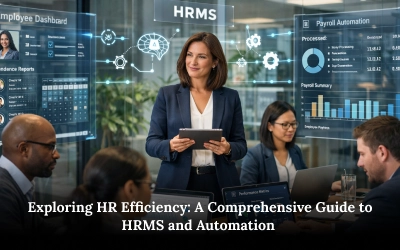
Discover Niyuk. Experience effortless screening and assessments. Book A Demo Today, HRMS – Human Resource Management System has become a trending affair in HR arena. It has become an integral part of today’s businesses and their HR teams. Basically, an HRMS is a management system, a type of HR software simplifying and automating all the vital HR processes beginning from hiring to the retirement. An HRMS, as per discussed, is a type of HR software enabling the management of various HR functions via the use of information technology. The innovation of technology brought along an array of changes and the advancement in technology has lifted the changes. The unsettling and recurrent questions on how to screen via dozens of resumes while being transparent to the job seekers, clearcut performance appraisals and many more have been answered with the onset of HRMS. To put it easily, HRMS is a magic stock which has been given to HR. In short, HRMS reforms workplaces. It supports do away with paperwork, lowers workload, binds and gathers data and more. 1. Payroll processing The payroll process is tedious. It starts immediately after candidate joins as an employee. Each employee must be paid as per their work hours and decided pay rate. Before giving the employee, a paycheque, anyhow, there are a lot of things to be considered. There are some things to consider also-Taxes, Provident fund, Cut-offs etc. As discussed, the payroll process is tricky and not easy. At the time of salary, the standard deductions as discussed above and remaining net salary must be given to the employee. The time required to process payroll is depending on the mode-if it is manual or with the use of HR software. HR software can save the amount of work by a greater extent. It is not required that all HRMS offers this, but it works as an important function which the systems may handle. Payroll is a vital still routine task and automating it will help in keeping the employees free for completing more important tasks. 2. Recruiting / hiring Hiring can be a boring process most of the times. It is very complex to manually go via countless resumes and connect to candidates. But is quite possible that a good candidate will be missed between this process. It can be a genuine mistake, but it will cost a good employee to the company. With HRMS/ HRIS, resume parsing and selection is easy than before. 3. Onboarding On the most basic level, onboarding is how a recruit gets familiar to the new company, with the policies, with the new profile etc. It is with the speed with which the employee gets sync with the teams, the process of incorporating them with the new atmosphere, catering email ids and more. HRMS helps in all such aspects. The onboarding becomes smooth with the correct HRMS platform. 4. Attendance tracking Manual employee attendance, leave requests and approvals are a click away with HRMS software. They really make everything easy and simple. Details concerning to the number of leaves taken, number of available leaves, PTO, Work from home such are kept monitor easily without confusions. This way, employees can get request for an approval, and the managers may plan for an absence easily. 5. Employee self- service The employees don’t need to go to the HR each time. They can raise suggestions and opinions via the HRMS platform. They can send feedback, update their profile, details, etc. within a click. 6. Performance appraisals Performance assessment is a systematic action way which supports in understanding how much an employee works in resonance with the organizational goal and analysing the results they have been producing. Setting of goals and tasks is made easy by HRMS platforms. The managers can assign task, and the employees may confirm once they are done. 7. Upskilling / training Humans can learn things. One must continuously polish their current skills and learn new skills to be able to grow in this competition-driven world. HRMS platforms give the space for employee skill upgradation or plan the training. 8. Rewards and recognition Employee recognition is an important aspect which has a direct impact on employee retention. Recognizing someone for their efforts should never be tough. Anyhow, with the onset of HRMS platforms, it has become easy than before. Some HRMS software makes rewards and recognition just simple and makes sure that the full company gets to know about the recognition and offers the provision of reacting and commenting about the recognition. 9. Analytics Some fine curated HRMS platforms show the on-screen statistics. It tells you in deep about the engagement index, attrition rates, performance analysis and more so that it will show the clear picture and one can act as per that. 10. Employee exits As told earlier, with the technology edge, the HRMS platforms have got smart and serves from hire to retire platform. It supports in easy retirement and termination. The team leaders and managers can raise requests for new talent requirements and plan for the void in advance. A sudden termination may be handled easily if there is an active HRIS / HRMS software at your workplace. Significance of HR Automation Current businesses and upcoming businesses tend to do fast paced business, or they are diverted into the fast lane. Anyhow, they need consistent strategies, which are agile at the same time. These processes need to be able to adapt fast to evolve business priorities. Offering an understanding of the corporate vision and to have a clear goal-setting process will help employees correlate their work and help to the large picture. It is tough to grab goal alignment with so many moving actions, this is where automated performance management systems can be of help. They allow managers to interact more smartly and collide goals across the organization and improve employee efficiency. Let us refer the benefits of HR Automation: 1. Powerful goal setting With automation in HR, you can streamline current complex processes or make a fully new and more effective goal setting process. Some best HRMS software come with functions allowing you to set the goals and monitor their progress. This will be a great relief for the managers and employees. They can set certain strategies with measurable goals that are in line with the company’s vision and mission. With HR automation, you can automatically memorise employees and managers about their goals at suitable times helping to keep the performance management process on track. 2. Improves collaboration When you remove redundant efforts, HR can focus on developing strategies for inter-department alliances and concentrate on teams achieving their strategic objectives fast. Aligned with features like peer recognition and 360-degree feedback, a boost in company-wide collaborative efforts will take employee performance and offer a platform for managing talent. 3. More productive employees When you automate HR using AI driven HR platforms, you get committed tools which help managers gauge employee performance relative to their assigned goals in a more powerful and real-time manner. This allows managers to have a deep insight into the ways that every employee performs and enables for accurate feedback. 4. Quick, agile and continuous feedback Millennials are changing over into important roles in the business landscape across the world. The new-age employees and managers both wish proactive feedback. HR automation platforms allow you to remove and revive the old, irrelevant
Hiring in Healthcare | Using AI with Ethical Practices
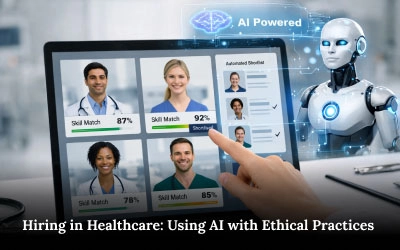
Discover Niyuk. Experience effortless screening and assessments. Book A Demo Artificial Intelligence is transforming the way – we hire in healthcare. Smart recruiting tools excel the process, support in finding the best professionals, and save valuable time for each one involved. As we adopt and rely on AI much widely, we must watch out and attain the concerns around transparency and ethics. Hiring in healthcare is the upcoming talk of the AI edge today. In this blog article, we are elaborating about ethics must be followed in AI-based hiring in the healthcare industry. Simplify hiring in healthcare with smart recruiting tools Try Niyuk to deliver results Book a Demo Challenges in Healthcare Recruitment Ethics As per AI healthcare data, while AI improves efficiency, it also comes with complex ethical risks that recruiters must browse carefully. 1. AI Bias in Recruitment AI algorithms trains from historical data, which mainly carries human biases. If earlier hiring practices is having some demographics, AI can improvise these types of biases. AI helps pick employees based on what happened in the past might like people from some backgrounds more than others. It might also say no to good people because of things that do not matter like if they are a man or a woman what country their family is, from or where they live. This may be unintentional, but careful picking of employee is a must. Unchecked bias in AI-driven hiring can establish imbalances and adjust on patient care quality in the long run. Collaboration with healthcare analytics consulting experts could help organizations in audit of algorithms, identify bias, and make sure for more equitable recruitment end results. 2. No Explainability and Transparency Giving candidates with clear explanations behind decisions improves transparency. But many AI hiring tools are “black boxes”, driven by tough algorithms, making it difficult for recruiters to explain decisions. Black boxes are AI systems assisting organizations in decision-making via deep learning. Anyhow, there are no clear explanations for those tough decisions they produce ever. To improve transparency, organizations might think for using AI model training services incorporating explainability features. Without transparency and explainability, organizations take risk for losing trust and could face legal challenges, if candidates claim the decisions to be not fair. 3. No Data Privacy and Consent AI tools need prospective amounts of personal and professional data about applicants. In the medical arena, where privacy is important, it is a ‘must’ to handle sensitive information responsibly. Recruiters have to collect candidate data with consent. You can ensure that it is stored safely and use it entirely for the intended hiring targets. Mishandling could discrete privacy laws and ethical standards. 4. Preventive in Accountability and Human Oversight Despite of how latest technology has become, AI must serve as a tool to support human decision-making in hiring. It must be full of ethical standards. And it is affirmative towards human intervention to check is it fair or not, breaching any law etc. Depending much on automation leads to a hiring experience lacking empathy and accountability, which are tough elements in the sector like healthcare. That’s why various organizations select to allies with healthcare-focused IT consultants, who help to make sure for accountability by designing governance frameworks, tracking AI performance, and setting up clear expansion of processes when automated decisions need manual review. Past Hiring Trends in Healthcare Before AI entry, hiring in healthcare replied heavily on human efforts, mostly taking for long hiring timelines and biases. The conventional hiring methods are having: Human Based Resume Screening: Recruiters had to filter via hundreds of resumes manually, looking for the correct skills, certifications, and experience. This process was slow and frequent, slowing down the hiring for required job positions. Subjective Assessments: Before AI, healthcare recruiters checked candidates with manual medication-calculation quizzes, paper skills tests, scenario-based panel interviews, and verbal reference checking. Limited Talent Pools: Employers mainly prefer their local job ads, professional contacts, and references. This gave them a little candidates pool, restricting their access to dynamic, quality candidates. Slow Hiring Timelines: Hiring for crucial medical roles would take months, sifting via endless no. of resumes, multiple interviews rounds, checking credentials, and slow communication. The lengthy process results in staff shortages. Human Compliance and Credentials: Even though a candidate accepted an offer, the HR team still need to incur days contacting state boards via phone or email to check for licenses and certifications. This is a slow, fragmented process which is prone to error and stretches for weeks, months. Hiring in Healthcare in the AI Age Artificial Intelligence has drastically improved healthcare recruitment, dropping down time-to-hire from various weeks to only some days. With the integration of AI in hiring, the landscape has changed remarkably, making processes more effective and easier. Automated Resume Screening: In some seconds, AI screening tools analyse resumes, filter candidates whose skills, credentials meet the role’s requirements while indicating non-matches. Data-Based Assessments: AI-driven platforms present virtual clinical conditions, and structured video interviews and medication calculation tests. Natural-language processing and behavioural analytics assess the candidate’s clinical judgment and teamwork verses evidence-based benchmarks. Such objective dashboards, powered by AI in healthcare, let recruiters judge applicants frequently and identify the talent mainly to boost up in patient care. Hyped Hiring Processes: Automatic scheduling, communication, and follow-ups support recruiters to move candidates fast via the hiring funnel. This prevents delay and non-availability of staff causing for the bad patient care. BoostedCompliance and Credential Verification:AI verification systems finely check licenses, certifications, and background details. This regulate the hiring process while making sure that rules are followed. Bias Reduction: Advanced AI tools synthesis on suitable skills and qualifications, not personal characteristics, reducing bias. Anyhow, regular updates and checks are always needed to ensure transparency. While no tool is perfect, well-trained AI tools help reduce unfair judgment. Overcome challenges in healthcare recruitment with AI Use practical AI in hiring made for actual need Start with Niyuk Third-Party Vendor’s Role in AI-Based Healthcare Solutions Outside vendors, adding AI technology providers, talent-acquisition SaaS companies, recruitment process outsourcing (RPO) firms, and data analytics experts, play a defining role in enabling AI adoption in healthcare recruitment. Their key responsibilities are: 1. AI Development and Integration Integrating customised AI development services automates data-heavy tasks like reading scans, highlighting high-risk patients, and organizing records, so clinicians get vital information fast. It also has treatment suggestions and real time outcome predictions helping doctors to make fast and accurate decisions and improve patient care. As AI excelling healthcare decisions, now accelerating cybersecurity by automation of threats, highlighting risks, and allowing fast reply. With the help of healthcare IT consulting services, the organizations can deploy these AI-driven tools into their current infrastructure. Health specialists use Electronic medical record (EMR software), Electronic health records, imaging machines, and telemedicine apps. This resolves the query- Why to develop a Telemedicine App. These tools may read scans, skim clinical notes, predict patient outcomes, and suggest possible diagnoses, all powered by latest neural-network models. Advanced systems made on a reinforcement learning environment allow continuous learning and optimization, enabling AI models to adapt based on real-world performance and feedback. 2. Data Collection Third-party vendors give tools for data collection, aggregation, and normalization. These can be incorporated into wearable devices, medical devices, attendant medicine software, and patient records. These tools help hospitals or clinics to gather and structure many data sources to use in AI analysis, while also allowing features like patient appointment text reminders to improve
How to Make Effective Pre-Employment AI Assessments (2026)
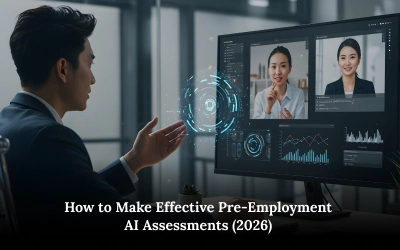
Discover Niyuk. Experience effortless screening and assessments. Book A Demo Recruitment has been less about resumes sorting and more about making quality decisions with speed and upgradation. In an environment, where talent is a key element, organizations may not afford fragmented workflows for recruiting or irregular assessments. The requirement for fast, accurate, and repetitive decision-making is pushing off HR teams to shift ahead of the conventional screening methods. AI assessments help in preparing early recruitment decisions fast, fair, and more regular. Moreover, relying on resumes or gut feelings, these tools evaluate candidates on real job-relative qualities, like how they resolve issues, communicate, adapt, or think under stress. They are designed to highlight potential, not just experience. As a business study found, while they don’t replace human judgment, they give your team better data to make more confident, informed choices. We have tried to break down how AI-based pre-employment assessments work, what they give to modern hiring strategies, and how to effectively deploy them in your organization, whether you’re growing a team or refining your assessment process in this blog article. Upgrade your hiring with smarter AI assessments Try Niyuk platform Go for Trial What Are AI-Powered Pre-Employment Assessments? AI-powered pre-employment assessments are well-designed Assessment methods by artificial intelligence to assess candidates. Assessment is done on job-relevant traits, skills, and competencies. These assessments support screen candidates and simulate real-world work scenarios to reveal how a candidate thinks, resolving problems, and applies their skills in context. Rather than relying only on past work experience, AI assess how well someone is likely to perform in the role they’re applying for. Mostly useful formats of AI-powered assessments are having: Video-based hiring assessments: Candidates answer to planned scenario-based questions visually, applying insights in their style, confidence level, and clarity. Technical tasks / simulations: These tasks test the functional, technical know-how in a job-specific context. Which is crucial for engineering roles, finance, or operations. For instance, to hire a Software Engineer position needing expertise in Python, the candidate may be prompted to solve Python test. Live situational assessments: Candidates interact with an AI agent to answer role-specific scenario questions and follow-up questions required to gauge decision-making, subject expertise, and practical thinking. Candidates do reply to statements / prompt revealing work preferences, personality traits, and compatibility within the team. When combined, these formats give you a comprehensive view of a candidate’s capabilities, much objective what you would get from a resume or a phone screen. How it Works? Candidates complete the assessment from anywhere at any time. The AI acts as an agent and analyses replies for communication skills, problem-solving ability, learning agility, and behavioural patterns, based on the criteria set for the role. Rather than having a recruiter present during the interview, AI agent acts as an intelligent assistant, automating repetitive initial screenings and resume shortlisting processes, while filtering top candidates based on their performance. It allows hiring teams to find high-potential candidates fast, especially in high-volume recruiting scenarios where manual assessments may not be that much useful. For example, instead of investing hours manually reviewing applications for a customer service position, recruiters may have candidates reply to a set of structured questions. The AI analyses reply for skills suitable to customer-service roles like tone, clarity, and communication skills. This latest solution can be developed with the help of an AI driven platform. A sales role can need confidence and adaptability, while a finance role may require analytical thinking and attention in detail. These traits are not easily grabbed with only resumes. Making AI-based assessments a precious tool for deep candidate profiling. Why to Use AI in Pre-Employment Assessments? AI-powered assessments boost initial-stage hiring with the analysis of how candidates reply to real-world scenarios. They are like timed video questions, problem-solving tasks, or behavioural prompts in AI led LMS. Inspite of resume scanning, these tools assess communication, adaptability, and critical thinking using structured, role-specific scoring. This allows organizations to hire at larger size without adjusting on candidate quality. 1. Fast Screening AI tools help assess 10 candidates in the time. It would take to assess 1-2 candidates using conventional over-the-call screening. This is a remarkable drop in the time spent on screenings at the start. This is very useful for roles with high application volumes, like customer service, sales, or graduate hiring programs. 2. Standardized Hiring With AI, each candidate is assessed with the use of the same parameters and scoring logic. This makes sure that each applicant applying for the same job; either it’s an entry-level role or a leader position, is assessed equally based on pre-specified job competencies. 3. Fair Hiring AI algorithms are programmed to emphasis on role-driven traits and remove factors that can introduce unconscious bias. For example, scoring model does not consider a candidate’s name, gender, or religious background, only their reply content. 4. Improved Candidate Experience AI algorithms are programmed to emphasis on role-driven traits and remove factors that can introduce unconscious bias. For example, scoring model does not consider a candidate’s name, gender, or religious background, only their reply content. 5. Scalability Either you are screening 50 or 5,000 candidates, AI tools does it easily. You don’t need to expand your recruiting team. Set up of assessments done once and enable the system to do the heavy load. Implementing AI Assessments into Initial Screening Based on the replies, the AI refines out low-scoring candidates and recommends top performers for next technical interviews, cutting down recruiter’s workload by 70%. You can take an AI development company’s help to make transparent and responsible AI hiring tools made to offer clear insights into decision-making processes, actively lower bias, and make sure for data privacy compliance. AI-driven assessments are very effective when incorporate on the verge of your hiring strategy. It serves as a planned, regular method to screen and filter candidates who are best suit to the job requirements. How to implement them intentionally is as per given below here: Step 1: Find Your Hiring Goals Inspite of AI’s evolving potential, various organizations stumble fast in their supply chain journeys due to certain persistent obstacles.The big issue is data quality and consistency. When formats are not matching, fields are missing, or data exist in isolated silos, also the smart AI can’t work efficiently. 1. Making Sure forData Quality & Unified SourcesBefore introducing AI into your screening process, get clear on what you’re solving for. It’s not only about use of AI. It’s about aligning AI with specific hiring goals. Do you want to reduce time-to-hire? Do you want to improve candidate quality? Is the goal to standardize hiring across departments? How to do it? Identify generic challenges in your early funnel. Connect with recruiters and hiring managers. Are they stressed out by resume volume? Struggling to evaluate soft skills objectively? Losing time to misaligned interviews. Write these pain points down. Example: “We get many resumes for customer-centric roles but can not assess quickly and assess communication skills.” Review 2 to 3 latest hires or failed interviews. What signals would’ve helped you spot the right (or wrong) candidates sooner? Think in terms of skills, behaviours, or traits which are currently hard to screen for at larger size. Translate those insights into measurable goals. Your goals may look like this: “Drop down time for reviewing resumes by 50%” “Filter candidates with strong critical thinking for technical roles.” “Get a regular view of soft skills before interviews.” This becomes your base for deciding how to use AI later. Step 2: Choose the Right AI Platform Once you have defined what you want to improve in your early screening stage, the next step is to select an AI platform which directly helps the goal. Aligning with AI Development services may help you make sure that the platform you select is customised to meet your hiring requirements. The right tool should simplify your shortlisting process and not compel you to change your full hiring flow. Here’s how to assess platforms: Start with your top screening goal from Step 1. For example: “We have a fast way to assess communication skills before interviews.” Use this goal as your decision filter when searching the tools. Shortlist platforms based on core features. Look for tools offering assessments designed specifically for early-stage screening. These
Time –to-Hire: All Vital Insights for Your Recruitment Cycle in 2026
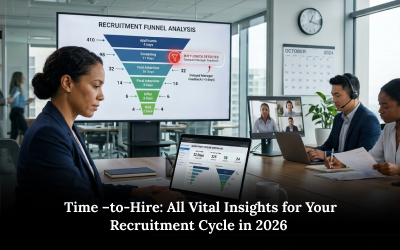
Discover Niyuk. Experience effortless screening and assessments. Book A Demo In 2026, The talent acquisition teams are experiencing the deep challenges of hiring the right resources. Many efforts of the team, the concern recruiter’s efforts to locate the right fit candidate for some few weeks’ time-to-hire ends on the selection ending with an offer email to the candidate. Th real twist is here. The offer receives reply from the chosen one that he has accepted some another offer. So, this is a complete loss of time-to-Hire and efforts as well. Time-to-hire has become the biggest critical parameter in HR arena today. One must confess that in 2026, time-to-hire is the main success factor or a man liability for any organisation. This defines the agility of the business in broader aspect. Top Talent Moves Fast Optimize your time-to-hire with error-free evaluations Use Niyuk Today Why Is Time-to-Hire Vital for Candidate Experience and Retention? Let us consider a genuine case here. A top-level AI expert or a high-performing Sales manager is going for a job hunt. Then they will look not only for a lucrative paycheque but also for a decent work culture. In case of a slow hiring process, what it conveys to the candidate? “We are indecisive.” “We don’t value your time.” “Our internal communication is probably a mess.” The best talent is off the market in 10 days or less in 2026. If your process takes up 3 weeks of “internal review” without any schedule for a second interview, you aren’t as it were being “thorough”, you are being undetectable. A fast time-to-hire makes a “Halo Effect.” It explains the candidate, “This company is well organized, decisive, and they want me.” That feeling carries over at least for first 3 months the job, directly impacting retention. How to Calculate Time-to-Hire: Formula and Best Practices To sort out your speed, you need a gut feeling free foundation. The seasoned approach is to search for the average across all roles, but also the median to make sure for one difficult executive role doesn’t twist or tweak the data for your high-volume hiring. 1. The Basic Time-to-Hire Formula Time to Hire = Day of Offer Acknowledgement – Day of Candidate Application Pro-Level Measurement Don’t just monitor the total days. Monitor the “Milestone Velocity”: Application to Screen: (Goal: < 48 hours) Screen to Interview 1: (Goal: < 3 days) Interview 1 to Final Offer: (Goal: < 7 days) By its further break up, you prevent guessing and start knowing which “lap” of the race is slowing down your process. 2. Industry Benchmarks: Actual vs. Expectation Some regular talks are: “We are a law firm, we have to be slow.” or “We’re a technical startup, we are naturally fast.” While industry works for a role, the “benchmark” is mostly an excuse for inefficiency. 3. Global Benchmarks of 2026 Industry Avg. Time-to-Hire The “Danger Zone” Technology/IT 20-33 Days > 40 Days Finance/Insurance 44 Days > 50 Days Healthcare 35 Days > 50 Days Retail/Hospitality 14-18 Days > 21 Days Professional Services 28 Days > 35 Days Global average time-to-hire is 44 days for all industries. Top candidates go off market in 10 days. Don’t focus for the “average.” Take target to be 20% faster than your direct competitor. If the firm across the street hires in 28 days, and you hire in 22 days, you will always get the edge. The Financial Effect: Calculating the Actual Cost of a Vacant Position Many companies monitor the hiring cost (ads, software, agency fees). Less companies monitor the cost of not hiring. Let’s work out some basic calculation which normally attracts the CFO’s attention. We use the Vacancy Cost Formula: If an employee makes $200,000 in revenue per year, and that role remains vacant for 40 days, you aren’t “saving” on their salary. You are at a loss of approximately $30,769 in unrealized value. And it is the direct revenue. It doesn’t account for: 1. The Burnout Trap: Why “Covering” for a Vacancy is a Slow Poison We normally tell ourselves, “The team is growing up,” as if that’s a long-term strategy. You can stretch this for some long period, but eventually it is going to break at some point of time. The “Invisible” Workload: When a seat remains vacant for 40 or 60 days, your top teammates don’t just take on additional tasks; they take on more mental load. They are context-switching regularly. This takes to “Decision Error.” Secondary Turnover: This is the furious part for any manager. Your “star” employees work more for that pending position. When they start feeling like they are doing double jobs for one salary, they do not complain; they only update their profile for new job. Suddenly, your “one vacancy” issue turns into a “two resignation” crisis. The Quality Slide: It’s a full erosion. You don’t notice it on day six, but by day thirty first, the “good ” standard becomes the new normal. Your culture shifts from innovation to survival. 2. The Brand Tax: Why Ghosting is a Financial Liability In 2026, your “Employer Brand” isn’t what your website shows; but it’s what the unhappy candidate says in a private Slack community or a Glassdoor review. The Costing of “Stale” Jobs: If a candidate watches a job post for almost three months, he does not appreciate that but finds that something is uneven with the post. High-quality talent will not even click “Apply.” This keeps you with a pool of desperate candidates, which further improves the risk for a “bad hire” (the only thing more costly than an empty seat). The LinkedIn “Whisper Network”: Candidates whisper. If your hiring process is slow or if people feel “ghosted” because the team was very busy “covering” the vacancy to respond, that news uncovers. You end up with a “Reputation Damage.”This means to hire the same talent next year; you’ll have to offer 10% to 15% more in salary mostly just to convince them to take the risk on a brand they assume as disorganized. The Marketing Conflict: Imagine your company incurs thousands on marketing to look “latest and fast” to customers, while your HR process looks “slow and ancient” to candidates. That loss of connection kills your credibility. Today’s candidate is tomorrow’s customer. Reasons of Hiring Delays and Ways to Fix Them Those were the days when interviews were long lasting. Nowadays, stop gaps between interviews rounds or interviews are causing major delays. Let us discuss them with their solutions here. 1. The Resume Black Hole It takes 5 days for a recruiter to refer at a new application. By that time, the candidate has applied to 10 other places. Solution: Use AI tools like Niyuk.ai to flag top-applicants promptly. 2. The Scheduling Issues Scheduling is a tough task really. To get 30-minute time slot from 3 decision makers is a mighty task to schedule the interview, even with the online mode. Solution: Give managers non- negotiable “Interview Blocks” in their calendar. 3. The “One More Person” Condition The hiring manager takes decision at the last moment that “Finance Head” should also meet the candidate. Solution: Clarify the interview panel even before the job posting. 4. The Indecisive Offer Waiting for budget re-approval or a prolonged budget re-approval, after the candidate has already been chosen. Solution: Do not post a job if the budget is not 100% locked. Strategies to Lower Down
Ultimate Use of Artificial Intelligence in Recruitment (2026)
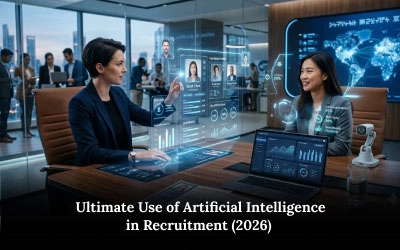
Discover Niyuk. Experience effortless screening and assessments. Book A Demo Latest AI recruiting tools are taking the control of HR and recruiting processes today. But there is no direct threat to human recruiters for the future. These tools are here to work smarter and automate many routine tasks for the HR team. We’re here to walk you through the key benefits, practical tips, and challenges AI in recruitment brings in. Let’s start! Optimize your AI in Hiring Process Today Use elite AI recruiting tools to hire fast Get Started with Niyuk Now 5 reasons to use AI in recruitment 1. Spend Minimum Time on Sorting, More on Hiring Using artificial intelligence-AI in recruitment can save several work hours. Rather than manually sorting via hundreds of resumes, AI can do the job in minutes. Report generation via AI can remarkably improve how hiring and selection processes work. It rapidly picks up the much suitable applications, letting you focus more on getting connected with the best candidates. 2. Prepare Scheduling and Communication Seamless Too much email communication just to schedule an interview is long lasting or time consuming for recruiters. HR technology keeps everything on track; it focusses more on connecting with candidates. AI manages all sub tasks like sending reminders before schedule, sending schedule times and sending invites to connect etc. Many companies have set up AI assistant who will handle the basic and starting enquiries related to HR and recruitments, openings etc. So that HR recruiters will get the time to do main priority tasks. 3. AI Assists you to Select the Best Candidates Technology- driven tools assess each candidate’s skills and experience and highlights the top matches for the role. Instead of sorting via applicants who do not meet the requirements criteria’s, you can spend time joining with standout candidates, supporting smart hiring choices and a strong team. 4. Make Data-Driven Options to Get the Right Fit AI tools evaluate the right skill and capability to do the job to select the perfect candidate for the required job profile. And AI Tools can support this process by making desired job descriptions, planned assessments, and personalized outreach attracting the much suitable candidates. This approach gives the simplest way to find their decisions on real-time data and not just on mere intuition only. It helps to focus on the right people and make a team driven for success. Organizations are using Agentic AI in HR to search workforce sentiment and behaviour. These insights also allow HR teams to maximise processes and improve complete organizational performance. Many companies are now finding Agentic AI for enterprises to extend such benefits beyond HR and drive smart, enterprise-wide decision-making. 5. Improves the Candidate Experience A smooth hiring process with a personal touch makes a positive candidate experience. AI software supports to make recruitment engaging and responsive, so applicants feel appreciated. When candidates feel easy with the process, they are very keen to apply in your company. This practice not just attracts more qualified persons but also supports to build a strong employer brand. Steps to Be Taken for Using AI in Recruiting Process Here are the regular steps to follow for the use of AI in recruitment. 1. Identify your Needs To start using AI in hiring, you must work out on which area it is going to help the maximum. Look at your existing recruitment tasks and find out the most occupying task on time base and efforts. You can think about resume screening, finding candidates, or scheduling interviews. 2. Select the Right AI Tool As per your need is identified, it’s time to search the right AI tools for your recruitment use. Start by researching options getting fit to your specific tasks. Go for those tools which are easy in use for you and team and must be easily integrate with your existing system. Selecting the best AI tools will help you simplify your hiring process and ease things. 3. Team Training Upon getting the right tool, it needs to take training for its use for all. Ensure that everyone knows how to operate these technical tools effectively. It’s very important for your team to know- the pros and cons of AI use. This training will make them confident to use the tools and the maximum utilisation of technology in your hiring process. 4. Track and Improve Have a watch on how your selected AI software performs in your hiring process. To check or measure their impact on the process as well as to check if, they are helping in meeting the recruitment goals faster or not is very important. You need to make changes to improve their functionality, in case of any issues. Regular check will help you to get the best results from your technology tools. 5. Stay Updated with the Latest AI Trends and Technologies You must have to be updated with latest AI trends and technologies to perform better always. Feel free to discover different tools and AI applications those helping to boost your recruitment process. This activity will take you to the enhancement of hiring. Being flexible and ready to adapt will retain you ahead of the curve. To get most of Ai in the work, regular learning of the technology is recommended. Best Practical Ways to Use AI in Recruiting 1. Screening Resumes When you have a mountain of CVs to go via, it can feel burdened. But AI make the sorting fast and easy. The recruitment technology scans for required skills and experiences, instantly helping you to spot the best candidates. This way, you can focus on your energy on the people who stand out, making your hiring process fast, more efficient. 2. Automates Interview Scheduling to Save your Time Scheduling interviews is a tough task. You can automate it with AI. This reduces the communication drastically. The system can check each one’s availability and get the right interview times. This power of automation saves you time and makes sure for a smooth experience for both you and the candidates. Adapt the most suitable recruitment process and eliminate the old-fashioned calendar task process. 3. Use of Chatbots to Answer Candidate Questions We know that candidates have lot of queries always, anywhere any time. With chatbots, you can offer prompt answers at any time of the day. It is used to automate answers for user’s query and to improve the user’s experience. As chatbots are widely used and readily available along with B2C or B2B purchasing platforms, they are easy to connect with HR systems. These friendly AI assistants can address common or basic routine queries regarding application status or job details, making your HR team free to go for more important tasks. Also, AI voice tools may improve communication by allowing candidates to ask verbal questions, making the interaction convenient. Candidates like quick replies. And you will develop a pleasant experience for each candidate. 4. Improving Job Descriptions for Better Inclusivity When writing job descriptions, using language that attracts all is important. You want to catch a diversified group of candidates. By emphasising on clear and inclusive wording, you can inspire people from various backgrounds to apply. This simple
Best Recruitment Agency Kolkata: 10 Reliable Hiring Firms

Discover Niyuk. Experience effortless screening and assessments. Book A Demo Kolkata, city much developed by the British empire, has gradually grown into one of eastern India’s most important business hubs. From IT services and manufacturing to retail, banking, and emerging startups, companies across the metro city are upscaling their teams to keep pace with evolving market demands. Anyhow, finding the right talent in a competitive job market can mostly be challenging. This is where the specialised skills of a professional recruitment agency Kolkata become valuable. A reliable recruitment agency in Kolkata does much more than only matching resumes with job descriptions. These agencies know industry hiring trends, retain strong talent networks, and help organizations to identify candidates who fit in both – the role and the company culture. For companies wish to scale fast or fill up their specialized roles, hiring an experienced recruitment agency Kolkata may make this process more efficient. In case it is permanent staffing, contract hiring, executive search, or workforce consulting, recruitment firms offer planned support at each stage of the hiring journey. In this blog article, we have described about the top recruitment agencies in Kolkata those have built strong reputations for joining employers with skilled professionals. These agencies deliver a wide range of hiring solutions and have supported organizations across industries to build capable and reliable teams. Need Skilled Talent Faster? Collaborate with a trusted recruitment agency Kolkata Try Niyuk for Automation 1. Adecco India Adecco Group functions as one of the world’s largest manpower solutions providers. In India, the company helps organizations to hire skilled professionals while also helping job seekers in getting suitable career opportunities. Businesses seeking for a trusted recruitment agency in Kolkata mainly work with Adecco because of its proper hiring approach and strong global talent network. The company is a helping hand to organizations across industries i.e. manufacturing, banking, healthcare, engineering, telecom, and retail. As a famous recruitment agency in Kolkata, Adecco focusses on delivering flexible hiring solutions to manage / organise manpower needs efficiently. Core Services Offered by Adecco India Generic StaffingAdecco offers flexible staffing solutions enabling companies for professional’s hiring to limited period roles or project-based assignments. Their hiring teams does sourcing, shortlisting, interviews, onboarding, and payroll management. Permanent RecruitmentThe agency assists organizations in hiring professionals for fixed roles. Adecco’s recruiter’s team use targeted strategies for sourcing and planned candidate assessments to get individuals to match the technical requirements and company culture. Recruitment Process Outsourcing (RPO)Adecco gives placement outsourcing solutions where the company controls the hiring process. From candidate sourcing to interview arrangements and onboarding procedure, RPO helps organizations to simplify recruitment processes and decline the hiring time. Payroll & HR OutsourcingAdecco offers payroll administration and manpower management services. These services support organizations to manage employee salaries, compliance requirements, and HR processes efficiently while dropping down the ultimate administrative workload. Training & Skills DevelopmentThe company does trainings and upskilling programs for employees to develop their industry-relevant skills. These programs are helpful to grow human productivity while supporting the companies to address skill gaps in teams. 2. RAM Management Consultancy RAM Management Consultancy is a Kolkata’s HR consultancy and recruitment agency specialising in manpower recruitment and placement services. The company works with business firms, organizations across various industries, including travel, retail, logistics, banking, healthcare, manufacturing, and hospitality. Companies looking for a practical recruitment agency in Kolkata mostly approach RAM Management Consultancy for its individualised hiring approach. The firm highlights on understanding the employer’s requirements and identifying candidates who match the job role and company expectations. Core Services Offered by RAM Management Consultancy Permanent Staffing SolutionsRAM Management Consultancy helps organizations hire professionals for full-time roles. Their recruiters know client requirements, source candidates from their network, and conduct screening processes to prefer suitable professionals for long-term positions. Manpower RecruitmentThe company facilitates manpower recruitment services for sectors – IT, banking, engineering, FMCG, telecom, hospitality, and logistics. The agency finds candidates with the right skills, experience required by employers. Training & Skill DevelopmentRAM also offers training programs specially made to improve candidate employability. These programs are required for the job seekers to develop their professional skills and prepare for industry-driven roles. Career CounsellingThe firm offers personalised career guidance for job aspirants. Their consultants support candidates in identifying career opportunities on their skills, education, and professional landmarks. 3. TalentHubJobs This is a recruitment cum job placement platform helping businesses to get connected with professionals across many industries. The company focuses on simplified hiring for organizations by offering recruitment support with a planning and access to a large talent base. Organizations seeking for a dependable recruitment agency Kolkata consider TalentHubJobs due to its technology-driven approach towards hiring. The company works with employers to get familiar with their hiring requirements and recommend candidates meeting both technical and organizational expectations. Core Services of TalentHubJobs Job Placement ServicesTalentHubJobs connect job seekers to employers across sectors – IT, marketing, finance, operations, and customer service. Their platform offers candidates to explore job opportunities matching their work experience and career objectives. Employer Recruitment ServicesThe company give hiring support for organizations wishing to hire professionals. Their recruiters do sourcing, screening and shortlist candidates before sending them to employers for final selection. Resume & Profile PromotionThe agency helps candidates to enhance their professional profiles and visibility in recruiters. This improves the chances to join with prospective employers and securing suitable job opportunities. Industry Hiring SupportThe company helps in hiring for industries like IT services, marketing, finance, and administration, supporting employers to have candidates with suitable expertise skills. Build the Right Team Quickly Work with a reliable recruitment agency in Kolkata Try Niyuk Now 4. Sunshine Placement Services This agency is a popular manpower consultancy service offering recruitment and staffing solutions to business firms across various industries of Kolkata and around. Companies looking for a responsible recruiting agency in Kolkata many times select Services of Sunshine for its deep awareness of employer, hiring requirements and skill matching of applicant. The agency collaborates extensively with businesses to better understand job requirements, company’s culture, and industry requirements. As a reputable recruitment agency in Kolkata, the company focuses on connecting companies with experts who can contribute to long-term organisational growth. Core Services of Sunshine Placement Services Permanent RecruitmentThe agency works for companies in recruiting professionals for long-term positions. Candidates are checked on their skills, working experience and role suitability before referring them to employers. Executive SearchThe firm helps organizations in identifying experienced professionals for leadership and senior management roles. Their executive search process adds to detailed candidate screening and industry research to make sure that the right talent is identified. Industry-Specific HiringSunshine Placement Services works with sectors i.e. IT, finance, marketing, retail, hospitality, and administration. Their recruiters know the specific hiring needs of every industry and prefer candidates accordingly. Candidate Screening & ShortlistingThe company conducts planned screening processes including resume evaluation, skill verification, and preliminary interviews. This makes sure for employers to receive candidates those are suitable for the job role. 5. FlipJobs FlipJobs is a digital recruitment platform to ease the hiring process for job seekers and employers. The company focuses on technology-driven recruitment permitting businesses to get skilled professionals efficiently. Organizations looking for a latest recruitment agency in Kolkata often find FlipJobs for its simple hiring model. The platform enables candidates to connect directly with recruiters while also allowing companies to search for suitable professionals. As a growing recruitment agency Kolkata, FlipJobs aims to fill up the gap between employers and job seekers via simplified recruitment processes. Core Services of FlipJobs Job Matching PlatformFlipJobs unite job seekers with employers by candidate profiles matching with job requirements. This system helps recruiters fast to identify suitable professionals for open positions. Employer Hiring SupportThe
Agentic AI in Recruitment: Intact the Human Role in Hiring
Discover Niyuk. Experience effortless screening and assessments. Book A Demo The real issue with top recruitment or HR leaders today is not about how AI is transforming HR processes but whether their down team will effectively use AI for removing the human bias, winning candidate trust and succeed to gain fantastic outcomes of using AI hiring model. Agentic AI in recruitment is useful for great hiring decisions. Across the recruitment industry, Certain trends are coming up. One is to make it fast to deploy agentic AI across their workflows to handle huge work. The other one is doubtful that automation will dilute human judgment, biased hiring outcomes, or lower down candidate experience. This is not an uneven picture. It’s the design bottleneck of modern recruitment. The toughest hiring teams aren’t selecting between AI and humans. They’re designing for an intended human-AI partnership, where each does in which it does best. Understand How Agentic AI in Recruitment is Reshaping Hiring Support smart decisions with a balanced AI hiring model Try Niyuk for Automation The Strengths and Practical Limits of Agentic AI Agentic AI refers to systems those perceiving information, make decisions, and act with minimal human interference. In recruitment, its strong points are clear. Tasks that once utilised full recruiting teams i.e. resume screening, interview scheduling, candidate reminding alerts, status updates – can now be done faster, more regularly, and at high volume. Screening hundreds of resumes verses structured criteria- this task is done by AI in some minutes. Interviewer’s availability is checked and scheduled across calendar by AI. Basic criteria matching across various candidates to schedule their first level interview is tirelessly done by AI. These abilities are not enough, as bulk table duties to be automated for high-volume and enterprise hiring. Where organizations juggle is assuming that each hiring decision should be treated in the same way. The Three Tiers of Hiring Decisions Not every hiring decision carries the same level of risk or responsibility. Still in various organizations, each step in the recruitment process is catered with the same level of attention. This mostly makes unrequired stress on recruiters and slows down the entire hiring process. The reality is simple. Certain decisions in recruiting are regular while others need experience, context, and concerned judgment. When companies fail to identify this difference, technology is underutilised or applied in the wrong areas. AI works well when it supports correct tasks rather than trying to organise each part of recruitment. It is preferable to divide hiring decisions into 3 tiers based on complexity and impact. Tier 1: Operational Decisions by AI The first tier has operational decisions. These are the daily tasks that keep the recruitment process moving but do not require deep analysis or human interpretation. They follow transparent rules and usually involve straightforward checks. For example: Does the candidate’s resume add the expected skills or certifications? Is the candidate available for the scheduled interview time? Have all compulsory documents or background checks been done? Does the application meet the basic eligibility criteria like experience level or job location? These steps may sense smaller, but they consume large chunk of a recruiter’s time. Reviewing resumes, checking of candidate details, documents confirmation, and coordinating interview slots cover up a full workday. As these tasks are necessary, they are very much administrative. This is exactly where Agentic AI may offer the maximum value. AI systems may quickly review applications, verify requirements, manage candidate information, and schedule interviews automatically. AI does the multiple hours consuming job by humans in some minutes. When these operational activities are automated, recruiters mostly gain back 15 to 20 hours each week. This time is easily utilised for most important tasks interacting with candidates, knowing their motivations and evaluating how well they fit inside the team and company culture. In this first tier, AI works well when it operates solely within clear guidelines. It acts as a trusted support system handling redundant tasks, keeps the hiring pool moving easily, and allows recruiters to focus on decisions really benefitting from human insight. Tier 2: Analytical Decisions (AI-Driven, Human-Owned) The second tier of hiring decisions is where technology and human judgment work jointly. These decisions are tougher over routine operational tasks, but they still give an edge- from structured data and insights. While AI can analyse information and highlight patterns, the ultimate judgment must be with recruiters or hiring managers. At this stage, hiring is no more about simple checks. Rather, it includes candidates’ assessment more thoughtfully and comparing them in a meaningful way. Recruiters start asking questions like: How does this candidate stand part from others applying for the same role? Does their working style align the environment and team expectations? Are there strengths or potential reasons that might not be obvious from a resume only? These questions require context and interpretation. A resume may show skills and experience, but it cannot grab how a person collaborates, adapts, or addresses problems in real situations. This is the reason why human involvement is a must. In this tier, AI acts as a support system than a decision-maker. Its role is to manage information, reveal useful patterns, and offer comparisons that will be helpful to the recruiters to see the big picture. For example, AI can quickly analyse assessment results, notice candidate strengths, and identify ‘close matches’ with the requirements of the role. This helps recruiters review candidates with clarity more and no guesswork. Instead of sorting via scattered data, they can focus on the insights. Anyhow, the final evaluation still depends on people. Recruiters and hiring managers usually bring together many important elements before deciding. These may include: Skills assessments, show the candidate’s technical abilities Behavioural indicators, which help understanding communication and work style Role benchmarks, which define the strong performance Team context, including culture, expectations, and the current team dynamics By considering all these factors together, hiring teams can make a clear and more balanced view of each candidate. When AI is used in this way, hiring becomes more planned and transparent. Decisions are no longer based only on instinct or first impressions. Rather, they are helped by managed insights and meaningful comparisons. In easy words, Tier 2 is where AI the recruiter’s perspective. It enables clarity to tedious information, while humans use experience, judgment, and awareness to make the final call. Tier 3: Strategic Decisions (Human-Led) These decisions design your organization: Is this a durable leadership hire? Should we trade experience for diversification or growth potential? Is this candidate worth to wait for? These are value-driven decisions including culture, strategy, and future impact. AI can offer data, but humans must lead. Organizations automating Tier 3 decisions much aggressively mostly see: Reduce offer acceptance Poor early retention Damaged employer brand The framework matters because misplacing automation is costlier than not using AI at all. Why This Moment Matters for HR Teams? By 2026, competitive edge in hiring would not come from “having AI.” It will come from AI expert’s teams. The recruiter role is already transforming – from administrative coordinator to talent strategist. AI excels this changeover, but only if teams are equipped to manage it. That means recruiters should: Interpret AI-generated insights Challenge scores when